Best Grass Types for Kenosha County Properties | Lawn Care Kenosha
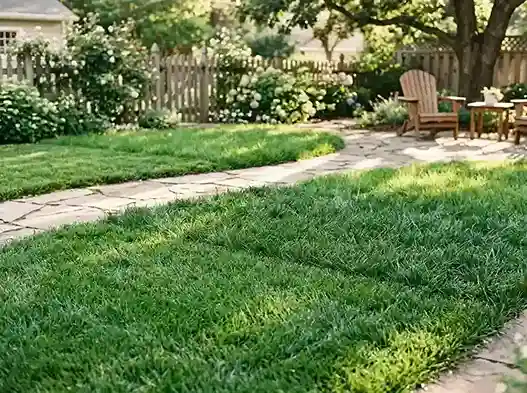
Best Grass Types for Kenosha County Properties
Choosing the right grass for your Kenosha County property is one of the most consequential decisions you’ll make as a homeowner. Get it right, and you’ll enjoy a thick, resilient, beautiful lawn that thrives through Wisconsin’s cold winters, wet springs, and hot summers with minimal struggle. Get it wrong, and you’ll spend years fighting bare patches, disease, and grass that simply doesn’t suit your soil or climate | no matter how much water or fertilizer you throw at it.
At Lawn Care Kenosha, we’ve worked with hundreds of local properties | residential, commercial, and everything in between | and we’ve seen firsthand which grass varieties perform best in Kenosha County’s unique microclimate. This guide puts that on-the-ground expertise in your hands, covering the five best grass types for Kenosha, their strengths and limitations, and exactly how to choose the right one for your specific yard.
Why Kenosha’s Climate Determines Your Grass Choice
Kenosha County sits at the southern tip of Wisconsin, just north of the Illinois border, in USDA Hardiness Zone 5b–6a. Its location along Lake Michigan moderates temperatures somewhat | winters are cold but rarely as brutal as central Wisconsin, and summers bring a mix of warm days and reliable moisture. These conditions place Kenosha squarely in the cool-season grass growing zone, the horizontal band running across the northern United States where cool-season grasses perform at their very best.
Cool-season grasses thrive in temperatures between 55°F and 75°F | exactly the conditions Kenosha experiences in spring and fall. They may slow down or go semi-dormant during the hottest, driest weeks of summer, but they bounce back vigorously when cooler weather returns. Warm-season grasses like Bermuda or Zoysia | popular in the Deep South and Midwest states to the south | cannot survive Wisconsin’s freezing winters and have no place in a Kenosha lawn.
Average January low: 14°F | Average July high: 83°F | Annual precipitation: ~33 inches | Frost-free growing season: approximately 175 days (late April through mid-October). These conditions make Kenosha ideal for Kentucky bluegrass, fine fescue, tall fescue, and perennial ryegrass | the four pillars of cool-season lawn care in Southeast Wisconsin.
Soil type also plays a major role in grass selection for Kenosha County. Much of the county sits on glacial deposits | a mix of clay, silt, and loam | with pockets of sandy soil closer to the lake. Heavier clay soils retain moisture well but drain slowly and compact easily, making aeration and drought-tolerant varieties important considerations. Well-drained loam soils support the widest range of grass types. Understanding your soil is the first step toward choosing the right seed.
The 5 Best Grass Types for Kenosha County
Based on our experience providing residential and commercial lawn care across Kenosha County, and backed by University of Wisconsin turfgrass science research, here are the five best grass types for local properties:
Kentucky bluegrass (KBG) is the undisputed king of cool-season lawns in Kenosha County and across the upper Midwest. With its rich, dark-green color, fine-to-medium leaf texture, and dense carpet-like growth habit, KBG produces the quintessential “premium lawn” look that most Kenosha homeowners aspire to. It spreads aggressively via rhizomes | underground stems | which allows it to self-repair damaged patches over time, a trait that sets it apart from bunch-type grasses.
KBG thrives in full sun and well-drained soil, performing best in the open, sunny front yards and backyards that are common across Kenosha’s residential neighborhoods. Its cold hardiness is exceptional | one of the highest among any turfgrass species | making it perfectly suited to Wisconsin’s harsh winters. During extended summer heat or drought, KBG may go semi-dormant and turn straw-colored, but it recovers reliably when cooler weather and moisture return in fall.
The primary trade-off with Kentucky bluegrass is maintenance demand. It requires consistent fertilization (typically 3–4 applications per season), regular watering during dry spells, and occasional dethatching since it tends to develop thatch over time. Its germination is also slow | typically 14–30 days | so patience is required after seeding. For most Kenosha homeowners who want a stunning, professional-quality lawn and are willing to invest in its care, KBG is the ideal choice.
Fine fescue is a collective term for a group of closely related cool-season grasses including creeping red fescue, Chewings fescue, hard fescue, and sheep fescue. All share the traits that make them invaluable in Kenosha County: outstanding shade tolerance, low fertilizer needs, moderate drought resistance, and a willingness to grow in poor, sandy, or infertile soils where other grasses struggle. Fine fescue is, without question, the best low-maintenance grass option available to Kenosha homeowners.
Fine fescue excels in situations that would challenge Kentucky bluegrass | particularly heavily shaded yards with mature trees, areas with consistently dry or nutrient-poor soil, and properties where the homeowner simply doesn’t want to invest heavily in lawn care. Of the fine fescues, creeping red fescue is the most widely used in Kenosha because it’s the only type that spreads via rhizomes, giving it some self-repair capability. The others (Chewings, hard, sheep) are bunch-type grasses that stay where you plant them but produce a very attractive, uniform texture.
The primary limitation of fine fescue is its poor tolerance for heavy foot traffic and its susceptibility to certain fungal diseases in hot, humid conditions. It’s also less wear-resistant than Kentucky bluegrass or perennial ryegrass, making it a poor choice for yards that double as athletic fields or dog runs. Fine fescue is most commonly used in combination with Kentucky bluegrass | a classic pairing that covers both sunny and shaded zones of a mixed lawn beautifully.
Tall fescue has undergone a remarkable transformation over the past two decades. Older varieties were coarse-textured utility grasses used primarily for roadsides and pastures, but modern turf-type tall fescue cultivars have a significantly finer texture and a deeper, richer green color that makes them genuinely attractive for residential and commercial lawns. Tall fescue is increasingly popular in Kenosha County, particularly for properties with clay-heavy soils, areas prone to drought stress, or sites where a lower-maintenance alternative to Kentucky bluegrass is desired.
Tall fescue’s greatest strength is its deep root system | one of the deepest of any cool-season grass | which allows it to access moisture and nutrients well below the surface. This makes it significantly more drought-tolerant than Kentucky bluegrass and more resilient during Kenosha’s occasional midsummer dry spells. It also offers decent shade tolerance and performs reasonably well in poor soils. Some newer rhizomatous tall fescue (RTF) varieties can spread and self-repair, addressing the traditional weakness of bunch-type tall fescue.
The main challenge with tall fescue in Kenosha is that it doesn’t self-repair as readily as Kentucky bluegrass, so bare spots from winter damage or heavy wear need to be overseeded. It also tends to look slightly different from the surrounding turf if it spreads into a Kentucky bluegrass lawn, creating a patchy appearance. For this reason, tall fescue works best in dedicated stands rather than mixed with other species.
Perennial ryegrass is the fastest-germinating cool-season grass available, capable of producing visible green growth in as little as 5–7 days after seeding under ideal conditions. This makes it invaluable as a companion grass in seed mixes, providing quick groundcover that protects bare soil from erosion and weed invasion while slower-germinating Kentucky bluegrass establishes itself. In Kenosha County, perennial ryegrass is rarely used as a standalone lawn grass but is a critical component in most quality seed mixes.
Perennial ryegrass produces a beautiful medium-to-dark green lawn with a fine texture and attractive sheen. It is also among the most wear-tolerant cool-season grasses, performing well on high-traffic lawns and even sports fields where consistent foot pressure would stress other species. Its tolerance for cold is reasonable, though not as extreme as Kentucky bluegrass, and Kenosha’s harshest winters can thin ryegrass stands significantly over time, necessitating regular overseeding every 2–3 years when planted in quantity.
Perennial ryegrass is prone to several fungal diseases | including gray leaf spot, red thread, and leaf spot/melting-out | particularly during hot, humid Wisconsin summers. It also requires consistent mowing and fertilization and doesn’t spread on its own to fill in damaged areas. Despite these limitations, it remains an essential ingredient in the best Kenosha lawn seed mixes, where its quick germination complements the long-term density of Kentucky bluegrass.
For most Kenosha County homeowners, a professionally formulated grass seed blend is the best choice | not any single species in isolation. The reason is simple: real-world lawns have variable conditions. A typical Kenosha property has sunny areas in the front, shaded zones under mature trees, high-traffic paths from the driveway to the back door, and low-lying spots that stay moist. No single grass species handles all of these conditions optimally.
The most proven blend for Kenosha County combines Kentucky bluegrass (50–60% of the mix) with fine fescue (20–30%) and a small percentage of perennial ryegrass (15–20%). In this configuration, the KBG dominates the sunny, open areas and self-repairs over time, the fine fescue colonizes shaded zones under trees, and the perennial ryegrass provides rapid germination coverage that protects the soil while KBG slowly establishes. The result is a cohesive, adaptable lawn that performs well across the full range of conditions found on a typical Kenosha property.
When shopping for grass seed blends in Kenosha, look for products with less than 0.01% weed seed content, minimum 85–90% germination rates, and a seed test date within the last six months. Quality blends from regional suppliers who understand Wisconsin’s cool-season growing conditions will consistently outperform generic national brands.
Kenosha Grass Type Comparison Chart
Use this quick-reference table to compare the five best grass types for Kenosha County properties side by side:
| Grass Type | Sun | Drought | Traffic | Shade | Maintenance | Best For |
|---|---|---|---|---|---|---|
| Kentucky Bluegrass | High | Premium sunny lawns | ||||
| Fine Fescue | Low | Shaded, low-maintenance | ||||
| Tall Fescue | Low–Moderate | Drought-prone, clay soils | ||||
| Perennial Ryegrass | Moderate | Fast establishment, mixes | ||||
| KBG + Fine Fescue Blend | Moderate | Most Kenosha properties |
● = Excellent performance | ◌ = Poor or not recommended
Choosing Grass by Property Situation
Rather than choosing a grass type in the abstract, match your selection to the real conditions and priorities of your specific Kenosha County property:
Best Grass for Full-Sun Kenosha Lawns
If your yard receives 6 or more hours of direct sun daily | the case for most front-facing lots in Kenosha’s residential neighborhoods | Kentucky bluegrass is the clear winner. Its love of sunlight, deep color, and self-repairing rhizomes make it ideal. A blend with 10–20% perennial ryegrass accelerates establishment and adds immediate wear resistance.
Best Grass for Shaded Yards in Kenosha
Kenosha County has many mature neighborhoods with significant tree canopy. In yards with partial to heavy shade (3–5 hours of sun), fine fescue is the non-negotiable choice. A blend of 60–70% fine fescue and 30–40% shade-tolerant Kentucky bluegrass cultivars works well in transitional zones that shift between sun and shade across the lawn.
Best Grass for High-Traffic Kenosha Properties
Families with kids, pets, or properties that host frequent outdoor activities need maximum wear resistance. Kentucky bluegrass (for its self-repair ability) combined with perennial ryegrass (for immediate toughness) is the professional’s recommendation. Our team at commercial and residential lawn care often recommends this blend for school properties, municipal parks, and active family backyards.
Best Grass for Kenosha’s Clay Soils
Properties across southern Kenosha County | particularly in older neighborhoods | often have heavy clay soils that drain poorly and compact easily. Tall fescue’s deep root system is ideally suited to pushing through clay and accessing moisture reserves. If your yard stays wet after rain or has chronic compaction issues, pair tall fescue with regular core aeration | a service included in our residential lawn care services.
Best Grass for Commercial Kenosha Properties
Commercial properties | office parks, retail centers, industrial sites, and multi-family housing | require grasses that look consistently good with a lower maintenance investment. Tall fescue or a high-fine-fescue blend is often the right call for commercial grounds where irrigation systems may be limited and mowing is done on a scheduled rather than growth-driven basis. Our commercial lawn care contracts are structured around the specific grass types used on each property, ensuring the right care at the right time.
Best Grass for Low-Maintenance Kenosha Lawns
If you want a presentable, healthy lawn without heavy time or financial investment, fine fescue is the answer. It needs less fertilizer, less frequent mowing, and is more forgiving of missed irrigation than any other cool-season option. A no-mow or low-mow fine fescue blend can even take on a naturalistic meadow character if left to grow slightly taller, which is growing in popularity for Kenosha properties with sustainability-minded homeowners.
Many Kenosha County properties feature patios, walkways, driveways, and retaining walls that directly border turf areas. The grass type you choose affects how well your lawn integrates with these features | particularly in terms of edging ease, rooting depth (relevant for raised beds and retaining walls), and appearance at borders. Our Trusted Hardscapers team coordinates with our lawn seeding programs to ensure your turf and hardscaping complement each other from day one.
Best Time to Seed or Overseed in Kenosha
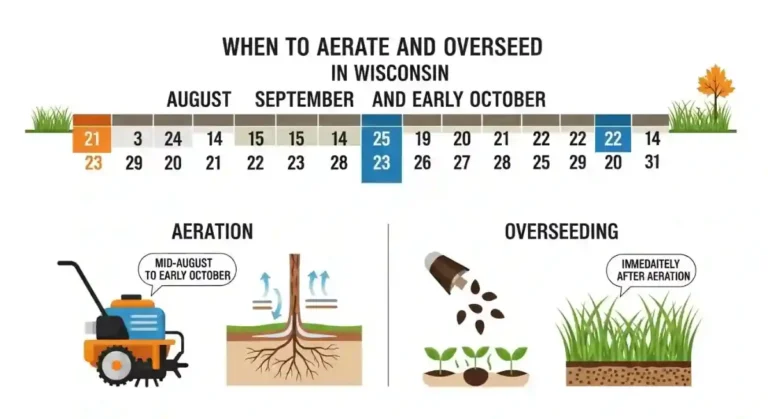
Timing is everything in grass seeding. Plant at the wrong time and you’ll waste seed, money, and weeks of effort. Plant in Kenosha’s optimal seeding window and you’ll be rewarded with fast, thick germination and a lawn that’s well-established before winter.
Seeding & Overseeding Tips for Kenosha Lawns
Whether you’re planting a brand-new lawn or refreshing an existing one through overseeding, these best practices will maximize your success:
Prepare the Soil First
Good soil preparation is the single biggest predictor of seeding success. Before planting, aerate the lawn to break up compaction and improve seed-to-soil contact. For severely compacted or clay-heavy Kenosha soils, a double-pass aeration (vertical and horizontal) combined with a thin layer of compost topdressing gives seeds the ideal germination environment. Our lawn care and maintenance team performs professional aeration as part of our fall renovation programs.
Slit-Seed for Best Results
For overseeding, a slit-seeder (vertical slicer) cuts furrows directly into existing turf and deposits seed at the correct depth. This method dramatically improves seed-to-soil contact compared to broadcasting seed over existing grass and can more than double germination rates. Professional slit-seeding equipment, operated by experienced technicians, consistently outperforms DIY broadcasting on Kenosha lawns.
Seed Selection Quality Matters
Always buy seed with a recent test date (within 6 months), less than 0.01% weed seed, zero noxious weeds, and minimum 85–90% germination. Regional seed suppliers who formulate blends specifically for Wisconsin’s cool-season climate will consistently outperform generic national brands found in big-box stores.
Consistent Watering After Seeding
Newly seeded lawns need light, frequent watering | typically two to three times daily | to keep the top inch of soil moist during germination. Once germination is complete (7–21 days depending on grass type), transition to deeper, less frequent watering to encourage root development. Our Kenosha Landscaping Services team can recommend or install efficient irrigation systems suited to newly seeded areas.
Hold Off on Mowing | Then Don’t Stop
Wait until new grass reaches 3 inches before the first mow. Set your deck to 2.5–3 inches for the initial cuts. After that, don’t skip mowing | consistent cutting through the first fall season helps new grass tiller and thicken, building the dense stand that will carry you into spring.
Skip Pre-Emergent Herbicides Near Seeding Time
Pre-emergent herbicides (crabgrass preventers) work by blocking germination | they cannot distinguish grass seed from weed seed. Do not apply pre-emergents within 8 weeks before or after seeding. If you’ve already applied a pre-emergent in spring, wait until late summer (past the product’s effective window) before overseeding.
Frequently Asked Questions
When to Call a Kenosha Lawn Care Professional
Choosing the right grass seed is a significant decision, but executing a successful seeding or renovation project requires equipment, expertise, and timing that often exceed what DIY efforts can provide. Consider working with a professional if:
- Your lawn has significant bare areas covering more than 30–40% of the total surface (full renovation may be more effective than overseeding)
- You’re unsure of your soil type or pH and need a soil test before choosing a grass variety
- Your property has complex transitions between sun and shade zones that require a customized seeding plan
- You want guaranteed results from professional slit-seeding equipment rather than broadcast-seeding by hand
- Your lawn has persistent disease, thatch, or compaction issues that need to be resolved before seeding can succeed
Our team at Lawn Care Kenosha provides comprehensive lawn renovation services | from soil testing and core aeration to professional slit-seeding, starter fertilization, and post-seeding care programs. We work with both residential lawn care and commercial lawn care clients throughout Kenosha County, delivering the right grass variety for every property’s unique conditions.
Whether you’re establishing a brand-new lawn on a newly built property, restoring a neglected yard, or simply refreshing thin turf with a professional overseeding, we’re here to make it right. Contact us today to schedule a consultation and let our experts recommend the best grass types for your specific Kenosha County property.
Get the Right Grass for Your Kenosha Property
Stop guessing and get expert advice on the best grass types, seeding programs, and lawn care plans for your specific yard. Our Kenosha team is ready to help.
View Lawn Care Plans Landscaping Services