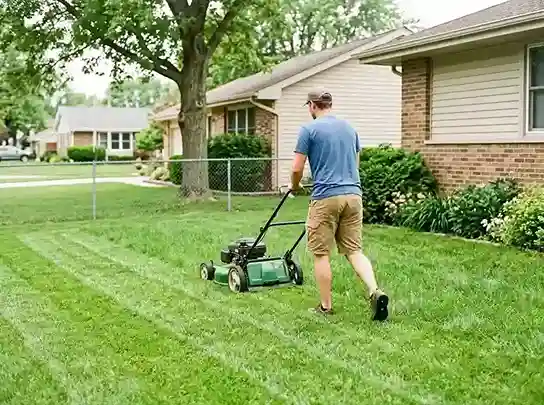
Spring Lawn Care Checklist for Kenosha Homeowners
Spring Lawn Care Checklist for Kenosha Homeowners
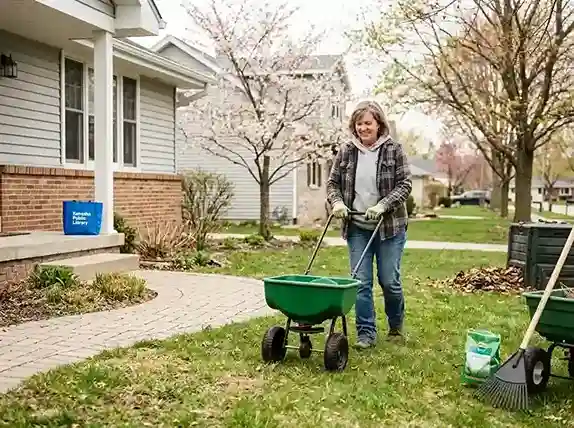
Every Kenosha homeowner knows that feeling: the snow finally retreats, and what’s left looks brown, patchy, and in rough shape. After months of Wisconsin winter, your lawn needs a clear, strategic recovery plan. But figuring out where to start — rake first? Fertilize now? Is it too late for weed prevention? — can feel completely overwhelming.
That’s exactly why this spring lawn care checklist exists. Built specifically for Kenosha’s cool-season climate, Zone 5b soils, and Lake Michigan microclimates, this guide breaks spring lawn care into a logical, month-by-month schedule so you’re never guessing. Whether you’re a long-time homeowner or just bought your first home near Lake Michigan, follow these spring lawn care steps and your yard will bounce back stronger and greener than ever.
At Lawn Care Kenosha, we’ve built thousands of lawns across Kenosha County, and we know what Wisconsin lawns need — and when they need it. This checklist reflects that on-the-ground experience.
📋 Table of Contents
- Why Spring Lawn Care Matters in Kenosha
- Understanding Kenosha’s Lawn Climate
- Spring Lawn Care Schedule: Month-by-Month
- Step 1 — Spring Cleanup & Debris Removal
- Step 2 — Lawn Assessment & Damage Inspection
- Step 3 — Soil Testing
- Step 4 — Dethatching
- Step 5 — Core Aeration
- Step 6 — Overseeding Thin & Bare Patches
- Step 7 — Pre-Emergent Weed Control
- Step 8 — Spring Fertilization
- Step 9 — Your First Mow of the Season
- Step 10 — Watering & Irrigation Setup
- Step 11 — Grub & Pest Prevention
- Step 12 — Edging, Hardscaping & Curb Appeal
- Common Spring Lawn Care Mistakes to Avoid
- Frequently Asked Questions
Why Spring Lawn Care Matters in Kenosha
The work you do in March, April, and May directly sets the trajectory of your lawn for the entire year. A strong spring foundation means your cool-season grass enters summer with deep roots, dense coverage, and a healthy soil ecosystem that can withstand heat, drought, and heavy foot traffic.
Skip spring lawn care, and you’ll spend the rest of the year fighting uphill battles against compacted soil, crabgrass invasions, bare patches, and disease. Wisconsin winters are hard on turf. Freeze-thaw cycles compact the soil, snow mold kills patches of grass, and winter salt and debris leave a mess that smothers new growth if left unaddressed.
The good news? A well-structured spring lawn care schedule doesn’t have to be complicated. It’s about doing the right tasks in the right order — and that’s exactly what our lawn care and maintenance team helps homeowners accomplish every spring across Kenosha, Pleasant Prairie, Somers, and Bristol.
Understanding Kenosha’s Lawn Climate
Before diving into spring lawn care steps, it’s important to understand what you’re working with. Kenosha sits in USDA Hardiness Zone 5b, which means your lawn is dominated by cool-season grasses — primarily Kentucky Bluegrass, Perennial Ryegrass, and Fine Fescue. These grasses love the cooler temperatures of spring and fall, thrive during Kenosha’s moderate summers, but can struggle during peak July and August heat.
Kenosha’s proximity to Lake Michigan creates unique microclimates. The lake moderates temperatures, meaning springs can arrive slightly later than inland Wisconsin, and frost risk lingers into early May in some years. This directly affects when you should apply pre-emergent herbicide, when to fertilize, and when to begin overseeding.
Soil composition in Kenosha also varies significantly. Many suburban neighborhoods deal with dense clay soils — particularly in new construction areas — that compact easily and drain poorly. If your soil is clay-heavy, core aeration becomes even more critical in your spring lawn care plan.
🌍 Kenosha Lawn Fast Facts
USDA Zone: 5b | Grass Type: Cool-Season (Bluegrass, Ryegrass, Fescue) | Pre-Emergent Window: Mid-to-Late April (soil 50–55°F) | First Fertilize: When soil ≥ 55°F | Last Frost: Typically early to mid-May
Spring Lawn Care Schedule: Month-by-Month for Kenosha
Timing is everything in spring lawn care in Kenosha, WI. Use this month-by-month schedule as your master planner. Every task builds on the one before — don’t skip steps or rush ahead.
| Month / Week | Task | Why It Matters |
|---|---|---|
| Late March – Early April | Spring cleanup, debris removal, lawn assessment | Clear the path for air, light, and new growth |
| Early April | Soil testing, dethatching (if needed) | Know your soil’s needs before adding anything |
| Mid-April | Core aeration (if needed), overseeding bare patches | Relieve compaction and fill thin areas before weeds do |
| Mid-to-Late April | Pre-emergent weed control (soil temp: 50–55°F) | Stop crabgrass before it germinates |
| Late April – Early May | Spring fertilization (soil temp: ≥ 55°F) | Feed grass without over-stimulating early growth |
| Early-to-Mid May | First mow, irrigation setup | Establish healthy mowing habits early |
| Late May | Grub prevention, post-emergent weed spot treatment, edging | Protect roots and maintain clean curb appeal heading into summer |
The Complete Spring Lawn Care Checklist — 12 Steps
This is the foundation of every effective spring lawn care schedule. Winter leaves behind a layer of leaves, twigs, matted grass, and organic debris that smothers your turf, blocks sunlight, and creates the perfect humid environment for fungal disease — including the notorious snow mold that plagues Kenosha lawns after heavy winters.
Use a spring-tine rake (not a stiff leaf rake) and work gently across the lawn surface. Your goal is to lift and remove debris without uprooting dormant grass crowns. Pay special attention to areas under trees and along fence lines where leaves accumulate in thick mats.
- Rake away all leaves, twigs, and dead grass clippings from winter
- Break up visible snow mold patches — rake them to improve airflow to roots
- Remove any salt-damaged grass along driveways and sidewalks
- Clear debris from lawn edges, garden beds, and hardscaped areas
- Remove any winter tree guards or burlap from shrubs adjacent to lawn areas
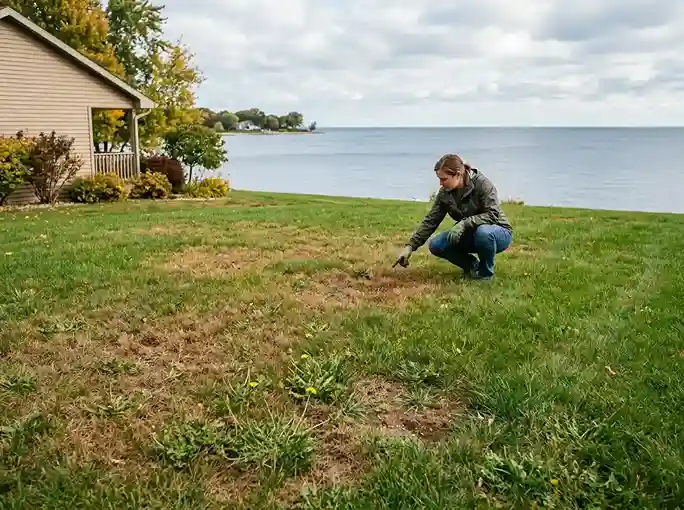
Once the cleanup is done, walk your entire property carefully and document what you find. This is your early spring lawn care diagnostic — the information you gather here will dictate every decision you make for the rest of spring. Look for these common Kenosha winter damage patterns:
- Snow mold circles — gray or pink circular patches where grass is matted and discolored
- Bare or thin spots — areas where grass failed to survive winter or was damaged by ice
- Frost heaving — areas where soil has shifted, lifting grass roots partially out of the ground
- Salt damage — yellowed or dead strips along roads, driveways, and walkways
- Pooling water zones — low spots where water stands after rain or snowmelt, indicating drainage issues
- Animal damage — mole tunnels, vole runway paths, or dog urine spots
Taking photos and notes from your inspection gives you a clear before-and-after reference as spring progresses. Our residential lawn care services team can also perform a professional lawn health assessment if you’d prefer an expert eye.
This is one of the most overlooked yet most valuable spring lawn care tips we can offer: test your soil before you add anything to it. Without a soil test, you’re guessing — and guessing often leads to either under-fertilizing (weak growth) or over-fertilizing (burned grass, excess runoff, and weed stimulation).
A basic soil test measures your lawn’s pH level and key nutrient levels (nitrogen, phosphorus, potassium). Cool-season grasses in Kenosha perform best at a soil pH of 6.0 to 7.0. If your soil is too acidic (below 6.0), you’ll need to apply lime. If it’s too alkaline, sulfur can help bring it back to range.
- Collect soil samples from 5–6 different spots across your lawn (6-inch depth)
- Mix the samples in a clean bucket for a composite reading
- Submit to your local UW Extension office or a certified lab
- Use results to guide your fertilizer selection and application rates
Thatch is the spongy layer of living and dead organic matter — roots, stems, and grass clippings — that builds up between the soil surface and your grass blades. A thin layer (under ½ inch) is actually beneficial, acting as a natural mulch. But once thatch exceeds ½ inch, it blocks water, fertilizer, and oxygen from reaching your soil.
Check your thatch layer by cutting a small plug of turf with a trowel. If the brown, spongy layer beneath the grass blades is thicker than half an inch, it’s time to dethatch. In Kenosha, Kentucky Bluegrass lawns tend to build thatch faster than fescue-dominant lawns.
- Use a dethatching rake for small areas or rent a power dethatcher (vertical mower) for large lawns
- Dethatch when the lawn is actively growing — not in dormancy
- Remove the loosened thatch material from the lawn surface after dethatching
- Water the lawn well after the process to help it recover
Core aeration is the process of mechanically removing small plugs of soil from your lawn, creating channels for air, water, and nutrients to penetrate deeply to the root zone. In Kenosha’s clay-heavy soils, compaction is a chronic problem — especially in high-traffic areas, near fence lines, and on slopes where water runs off rather than soaking in.
Important Wisconsin timing note: For cool-season lawns, fall remains the ideal aeration window. Spring aeration is best reserved for lawns with severe compaction issues — pooling water, visibly hard soil, or struggling grass in high-traffic zones. If your lawn is in reasonable shape, hold off until September or October for your primary aeration treatment.
- Use a core aerator (not a spike aerator) — core aeration relieves compaction; spike aeration can worsen it
- Aerate when soil is moist but not waterlogged
- Leave the soil plugs on the lawn — they’ll break down naturally and return nutrients
- Follow immediately with overseeding for maximum seed-to-soil contact
Aeration and overseeding work best as a pair. The holes left by core aeration create perfect seed pockets — dramatically improving germination rates compared to overseeding on un-aerated turf. Our residential lawn care services list includes professional aeration and overseeding packages designed specifically for Kenosha’s clay soils.
Bare and thin patches left untreated in spring become weed colonies by May. Overseeding fills these gaps with the same cool-season grasses your Kenosha lawn thrives on — before crabgrass and broadleaf weeds can colonize the open soil.
Choose a grass seed blend appropriate for our Wisconsin climate: Kentucky Bluegrass, Perennial Ryegrass, and Fine Fescue mixes work well for most Kenosha properties. For shaded areas, go heavier on Fine Fescue, which tolerates shade far better than Bluegrass.
- Loosen the top ¼ inch of soil in bare patches before seeding
- Spread seed evenly at the recommended rate (usually 4–8 lbs per 1,000 sq ft for overseeding)
- Lightly rake seed into soil to achieve good soil contact
- Apply a thin layer of compost or topsoil to help retain moisture
- Water lightly twice daily until germination (typically 7–21 days for cool-season grasses)
- Note: Do NOT apply pre-emergent herbicide in areas you’ve seeded — it will block grass seed germination too
One pre-emergent application in spring can save you months of hand-pulling and post-emergent herbicide treatments. Pre-emergent herbicides work by creating a chemical barrier in the soil that prevents weed seeds from germinating — targeting crabgrass, goosegrass, and many annual broadleaf weeds before they ever appear.
Timing is everything. Apply pre-emergent in Kenosha when soil temperatures at the 2-inch depth reach 50–55°F — typically mid-to-late April in our area. Using a soil thermometer is far more accurate than going by calendar date, since Lake Michigan’s moderating effect can shift temperatures from year to year.
- Monitor soil temperature at the 2-inch depth with a soil thermometer
- Apply when temps consistently reach 50–55°F (crabgrass germination threshold)
- Water the pre-emergent in lightly after application to activate it
- Do NOT apply pre-emergent where you’ve recently overseeded
- Consider a second application 6–8 weeks later for extended crabgrass protection
⚠️ Important: Never apply pre-emergent and overseed in the same area at the same time. Pre-emergent blocks ALL seed germination — including your grass seed. Overseed first, wait at least 4–6 weeks for full establishment, then treat surrounding areas with pre-emergent.
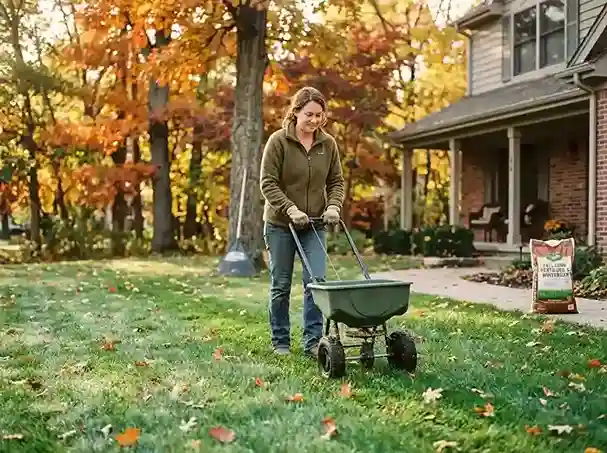
Fertilizing at the right time is one of the most critical — and most commonly mishandled — spring lawn care tips for Kenosha homeowners. Apply too early (when soil is below 55°F) and you’re feeding weeds without meaningfully stimulating grass growth. Apply too much nitrogen and you risk burning grass, accelerating top growth at the expense of root development, and triggering disease.
For cool-season lawns in Wisconsin, a light, balanced spring fertilizer application at ½ to 1 lb of actual nitrogen per 1,000 sq ft is typically sufficient. A slow-release granular fertilizer gives steady, controlled feeding without overwhelming your lawn. Save the heavier fertilization for fall — that’s when Kentucky Bluegrass and Ryegrass truly benefit from a bigger nutrient boost.
- Wait until soil temperature exceeds 55°F at the 2-inch depth
- Choose a balanced slow-release granular fertilizer (e.g., 18-0-6 or 24-0-11 ratio)
- Apply with a broadcast spreader for even coverage
- Water in after application to activate the granules and prevent burning
- Avoid fertilizing within 48 hours of predicted heavy rain (runoff risk)
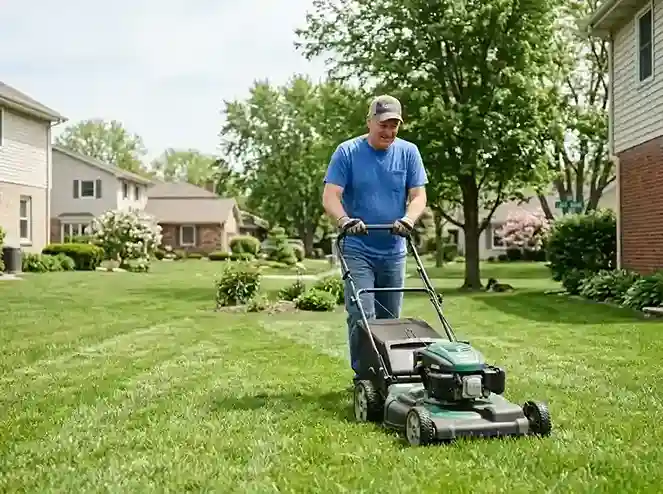
The first mow of spring sets a precedent for the entire mowing season. A clean, correctly timed first cut encourages lateral grass growth (thickening your lawn), removes the dead tips of winter-weakened blades, and helps your turf look polished and healthy heading into the growing season.
In Kenosha, mow your cool-season lawn at 3 to 3.5 inches — never shorter. Cutting below 2.5 inches exposes soil to sunlight, promotes weed germination, and stresses grass that’s still recovering from winter. Follow the one-third rule at all times: never remove more than one-third of the grass blade in a single mowing session.
- Sharpen mower blades before the first cut — dull blades tear grass and invite disease
- Mow when grass is dry to prevent clumping and uneven cutting
- Set mowing height to 3–3.5 inches for cool-season Kenosha grasses
- Leave grass clippings on the lawn (“grasscycling”) to return nitrogen naturally
- Never mow a newly seeded area until new grass reaches 3.5–4 inches tall
Proper spring watering is about encouraging deep root growth — not just keeping the surface moist. Shallow, frequent watering produces shallow roots that struggle in summer heat. Deep, infrequent watering trains roots to grow downward in search of moisture, producing a drought-resilient lawn that can handle Kenosha’s occasional July dry spells.
- Water deeply 1–2 times per week, not daily — aim for 1 inch of water per week total (rain + irrigation)
- Water in early morning (before 10 AM) to minimize evaporation and reduce disease risk
- Newly seeded areas need light, twice-daily watering until germination
- Check and recalibrate irrigation heads before the season begins
- Use a rain gauge or tuna can to monitor how much water your sprinklers actually deliver
Japanese Beetle and European Chafer grubs are a serious concern for Kenosha lawns. These larvae feed on grass roots underground throughout late summer and fall, causing sections of turf to die from below — often not discovered until the damage is extensive. The best time to prevent grubs is in spring and early summer, before the adult beetles lay eggs and while existing grubs are still small and vulnerable.
- Apply a preventive grub control product in late May or June (before egg hatch)
- Look for active ingredients like chlorantraniliprole or imidacloprid for season-long control
- Water preventive grub treatments in thoroughly within 24 hours of application
- Check for grub activity by pulling up turf — 5 or more grubs per square foot typically warrants treatment
- Monitor for signs of grub damage: irregular dead patches, turf that lifts like a loose carpet
A beautifully maintained lawn is only as impressive as the framework around it. Clean, crisp edges along your driveway, sidewalks, and garden beds transform a good lawn into a great-looking property. This final step in our spring lawn care checklist is about putting the finishing touches on your outdoor space so it shines from the street.
Spring is also the perfect time to assess your hardscaping features — patios, pathways, retaining walls, and decorative borders — for winter damage. Freeze-thaw cycles can shift paver stones, crack concrete, and loosen retaining wall blocks. Addressing these issues early prevents small problems from becoming expensive repairs by summer.
- Edge all lawn borders with a half-moon or rotary edger for clean, defined lines
- Re-define garden bed edges with fresh mulch (2–3 inch layer) after edging
- Inspect hardscaped areas for shifted pavers, cracked concrete, or settled retaining walls
- Clean off winter grime from driveways, sidewalks, and patios
- Trim any shrubs or ornamental grasses that have sprawled over lawn edges during winter
Our Trusted Hardscapers team handles everything from paver restoration to full outdoor living area designs — a perfect complement to your spring lawn renewal.
Common Spring Lawn Care Mistakes to Avoid
Even the most diligent Kenosha homeowners fall into these traps. Knowing what not to do is just as important as knowing the right spring lawn care steps.
❌ Over-Fertilizing Too Early
Applying heavy nitrogen in March or early April — before soil temperatures have warmed sufficiently — primarily stimulates rapid, weak top growth rather than deep root development. This actually makes your lawn more vulnerable to disease, drought, and stress later in the year. Wait until soil temps consistently exceed 55°F.
❌ Mowing Too Short (Scalping)
Cutting your Kenosha cool-season lawn below 2.5 inches is one of the fastest ways to ruin it. Low mowing exposes bare soil — a welcome mat for weed seeds — and stresses grass that is still recovering from Wisconsin’s long winter. Always mow at 3 to 3.5 inches throughout spring and summer.
❌ Applying Pre-Emergent Over Fresh Seed
Pre-emergent herbicide doesn’t discriminate between weed seeds and grass seeds. If you’re overseeding thin spots, do it first and let the grass establish for 4–6 weeks before applying any pre-emergent weed control to surrounding areas.
❌ Overwatering
A common early spring lawn care mistake: watering daily in small amounts. This keeps the soil surface perpetually moist (ideal for fungal disease) while roots never develop the depth needed to handle summer. Water deeply twice a week instead.
❌ Skipping the Soil Test
Guessing at fertilizer type and quantity without soil test data leads to imbalanced nutrient levels, pH drift, and wasted money. A soil test costs very little and saves significantly in misapplied products.
❌ Starting Too Late
Late April and May overseeding works — but it’s far less effective than getting overseeding done in early-to-mid April in Kenosha. Early spring gives new grass time to establish before summer heat arrives and weed competition intensifies.
Professional Spring Lawn Care in Kenosha, WI
Managing a complete spring lawn care schedule takes significant time, the right equipment, and a deep understanding of local soil and climate conditions. Many Kenosha homeowners choose to partner with a trusted local lawn care provider to handle the heavy lifting — or at least the more technical tasks like aeration, grub treatment, and weed control.
Lawn Care Kenosha offers comprehensive residential lawn care and commercial lawn care services built around Kenosha’s specific growing conditions. From one-time spring cleanups to full-season commercial lawn care contracts, we have the team, equipment, and local expertise to get your property looking its best.
Our Kenosha Landscaping Services go beyond grass — we design and install planting beds, landscape borders, and outdoor spaces that complement a well-maintained lawn. And for outdoor structure projects, our Trusted Hardscapers team specializes in patios, walkways, retaining walls, and decorative stone features that elevate your entire property’s curb appeal.
Whether you’re looking for commercial and residential lawn care or simply need your spring maintenance handled by professionals who understand Kenosha’s unique lawn demands, we’re here to help. Our residential lawn care services list covers everything from aeration to fertilization to grub prevention — all in one convenient seasonal program.
Frequently Asked Questions About Spring Lawn Care in Kenosha
Your Path to a Greener Kenosha Lawn Starts This Spring
Spring is the season that determines everything that follows. A lawn that’s properly cleaned, assessed, aerated, overseeded, and fed in spring is dramatically more resilient, beautiful, and low-maintenance through summer and fall. Skipping steps now means fighting problems later.
This spring lawn care checklist for Kenosha homeowners gives you a complete, sequenced road map — from the first rake strokes of late March through the pest prevention and edging of late May. Follow the schedule, respect the soil temperature thresholds, and resist the urge to rush tasks before conditions are right.
And if you’d rather leave the spring recovery to proven professionals, our team at Lawn Care Kenosha is ready to help. From residential lawn care services to full landscaping programs to hardscaping projects that frame your lawn beautifully — we’re your all-in-one outdoor property partner in Kenosha, WI.
Ready to Transform Your Kenosha Lawn This Spring?
Get a free estimate from Kenosha’s trusted lawn care and landscaping experts. We handle residential and commercial properties across Kenosha County.