How Often Should You Mow Your Lawn in Kenosha?
If you’re a homeowner in Kenosha, Wisconsin, you’ve probably asked yourself at least once: how often should you mow your lawn? It’s a deceptively simple question with a surprisingly layered answer. Mow too often and you stress the grass. Wait too long and you invite weeds, pests, and patchy turf. Get the timing right, and you’ll have a lawn your neighbors can’t stop complimenting.
Kenosha sits in Southeast Wisconsin’s cool-season grass belt, where the combination of humid summers, wet springs, and cold winters creates a distinctive growth pattern unlike, say, how often should you mow your lawn in Texas, where warm-season grasses dominate. Knowing what Kenosha’s climate demands — season by season — is the foundation of a healthy, green lawn from April through November.
In this comprehensive guide from the team at Lawn Care Kenosha, we’ll walk you through ideal mowing frequencies for every season, explain the critical one-third rule, break down blade sharpening and oil change schedules, and give you the professional insight you need to keep your lawn thriving all year long.
Why Mowing Frequency Matters for Kenosha Lawns
Mowing isn’t just cosmetic — it’s one of the most important cultural practices in lawn care and maintenance. Consistent, properly timed cuts encourage grass to grow thicker and develop deeper root systems, making it more resistant to drought, disease, and weed invasion. Irregular mowing, on the other hand, shocks the turf and creates an uneven, stressed lawn that becomes a magnet for problems.
Kenosha’s location near Lake Michigan creates a microclimate with ample spring rainfall and occasionally humid summers. These conditions fuel rapid grass growth in April, May, and September — periods when mowing frequency is critical. Understanding the rhythm of your lawn’s growth, rather than following a rigid calendar, is the professional approach that separates a great-looking yard from an average one.
Kenosha averages 33 inches of annual precipitation. Spring and early fall are the peak growth periods for cool-season grasses like Kentucky bluegrass and fine fescue — the most common turf types in the region. Expect to mow most frequently between April–June and again in September–October.
The One-Third Rule Every Kenosha Homeowner Needs to Know
Before diving into seasonal schedules, you need to internalize the single most important principle in lawn mowing: never remove more than one-third of the grass blade’s height in a single mow.
This is known as the “one-third rule,” and it is non-negotiable if you want a healthy lawn. When you cut more than a third of the blade at once, you force the grass to redirect energy from root growth to recovering lost leaf tissue. The result is a weakened root system, increased vulnerability to drought, and an open invitation to weeds and disease.
In practical terms, if your target mowing height is 3 inches, you should mow before the grass exceeds 4.5 inches. If you let it creep to 6 inches before cutting, you’ll need multiple passes or risk shocking the lawn. This is why mowing frequency and mowing height are inseparable decisions.
How Often Should You Mow Your Lawn in Spring?
Spring is the most demanding season for Kenosha lawn mowing. Cool-season grasses like Kentucky bluegrass and fine fescue wake up aggressively when soil temperatures climb above 50°F — typically in mid-to-late April in Kenosha — and can put on an inch or more of growth per week during favorable conditions.
Recommended mowing frequency in spring: every 5–7 days.
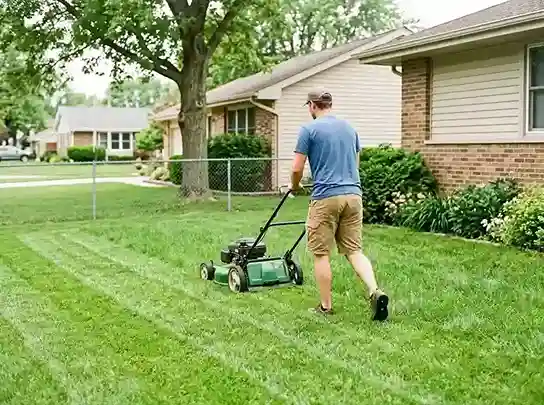
Begin mowing when the grass has actively resumed growth and reached your target height. For the first couple of cuts, you can set your mower deck slightly lower (around 2 inches) to remove the winter-burned brown tips and expose the fresh green growth beneath. After those initial cuts, raise the deck back to your standard height of 2.5 to 3 inches.
Don’t rush to mow at the first sign of green. Wait until nights are consistently above 50°F and the grass is actively growing — not just greening up from stored energy. Mowing too early on saturated spring soil can compact your lawn and damage the root zone. Our residential lawn care services include calibrated spring startup mowing to protect your turf.
Spring Mowing Tips for Kenosha
If April brings heavy rainfall — which it often does in Kenosha — your lawn may need mowing more than once a week to stay within the one-third rule. Never mow wet grass if you can avoid it; wet clippings clump, clog your mower deck, and create uneven cuts. If you must mow a damp lawn, raise your deck height slightly and go slowly.
Leaving grass clippings on the lawn in spring (grasscycling) is one of the smartest moves you can make. Clippings break down quickly and return nitrogen to the soil — the equivalent of one free fertilizer application per season.
How Often Should You Mow Your Lawn in Summer?
Summer mowing in Kenosha is all about protecting your cool-season grass from heat stress. Unlike warm-season varieties (such as Bermuda or Zoysia — the dominant types when people ask how often should you mow your lawn in Texas), Kenosha’s Kentucky bluegrass and fescue slow their growth significantly during the heat of July and August.
Recommended mowing frequency in summer: every 7–14 days, depending on rainfall and temperature.
During a cool, rainy Kenosha summer, you may still need to mow every 7 days. During a hot, dry spell, the grass may go semi-dormant and a bi-weekly schedule is perfectly appropriate. The key is to watch your grass, not the calendar.
Summer Mowing Height Matters More Than Frequency
In summer, raise your mower deck to 3–3.5 inches. Taller grass blades shade the soil, reduce moisture evaporation, and keep the root zone cooler. This single adjustment can be the difference between a lush, green lawn and a scorched, patchy one come August.
Mow in the early morning or late afternoon to reduce heat stress on both the lawn and yourself. Avoid midday mowing when the sun is strongest. Early morning cuts also allow freshly cut blades to recover during the cooler afternoon hours.
Our professional team provides reliable residential lawn care and commercial lawn care throughout the Kenosha area, including summer mowing programs tailored to your specific grass type and property size.
How Often Should You Mow Your Lawn in the Fall?
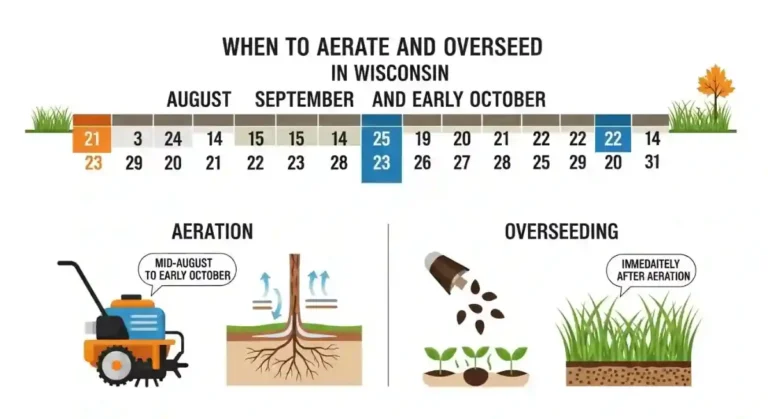
Fall is the second-most active growing period for Kenosha lawns. As temperatures cool back into the 60s and rainfall returns in September and October, cool-season grasses wake up again and push strong vegetative growth. This is also the critical window for overseeding, fertilizing, and setting your lawn up for a successful spring.
Recommended mowing frequency in fall: every 7–10 days through October, then tapering off in November.
Continue mowing at your standard height until growth visibly slows — usually by mid-October in Kenosha. For your final 2–3 cuts of the season, gradually lower your deck to 2–2.5 inches. This shorter final height prevents snow mold (a common Wisconsin lawn disease), reduces matting under snow cover, and encourages the crown of the grass to harden off properly for winter.
Stop mowing when your grass goes fully dormant — typically after the first hard freeze (28°F or below for several hours). Mowing dormant grass accomplishes nothing beneficial and risks damaging the crowns.
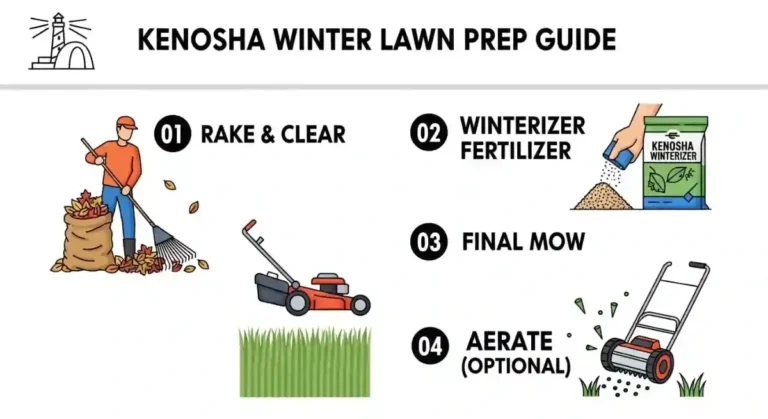
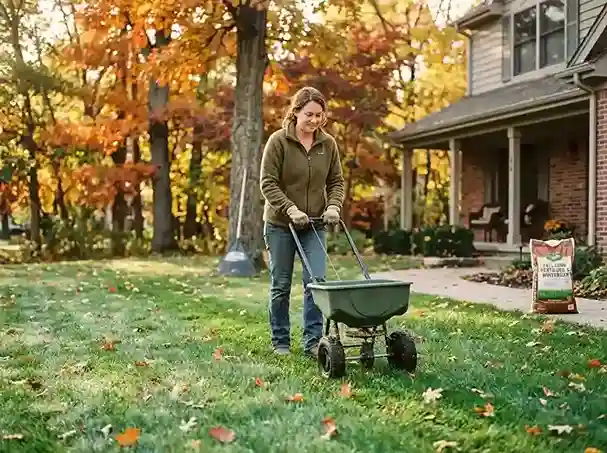
Don’t let fallen leaves sit on your lawn. A thick leaf layer blocks sunlight and traps moisture, creating ideal conditions for fungal diseases. You can mulch thin layers of leaves directly into the lawn with your mower — they’ll decompose and add organic matter. Thick piles should be raked or blown clear. Our Kenosha Landscaping Services include full fall cleanup programs.
Kenosha Grass Types & Their Mowing Needs
The right mowing schedule depends partly on which type of grass is growing in your Kenosha yard. Most Kenosha lawns feature one or a blend of the following cool-season varieties:
| Grass Type | Ideal Height | Peak Growth | Mowing Frequency (Peak) |
|---|---|---|---|
| Kentucky Bluegrass | 2–3.5 inches | Spring & Fall | Every 5–7 days |
| Fine Fescue (Chewings, Creeping Red) | 2.5–4 inches | Spring & Fall | Every 7–10 days |
| Tall Fescue | 3–4 inches | Spring & Fall | Every 7 days |
| Perennial Ryegrass | 1.5–3 inches | Spring & Fall | Every 5–7 days |
| Mixed Blend (most Kenosha lawns) | 2.5–3.5 inches | Spring & Fall | Every 6–7 days |
Kentucky bluegrass is the most demanding — it has one of the fastest growth rates during its peak season and benefits from more frequent mowing. Fine fescue is more tolerant of lower fertility and infrequent mowing, making it a good choice for shaded areas or low-maintenance zones of your yard. Tall fescue is increasingly popular in Kenosha for its heat and drought tolerance relative to bluegrass.
How Often Should You Sharpen Your Lawn Mower Blades?
This is one of the most overlooked aspects of proper lawn care, yet it has a dramatic impact on the health and appearance of your lawn. Sharp mower blades make clean, precise cuts. Dull blades tear and shred grass tissue, leaving ragged edges that turn brown within a day or two and dramatically increase susceptibility to fungal diseases.
The standard recommendation: sharpen your lawn mower blades every 20–25 hours of mowing time.
For a typical Kenosha homeowner with a 6,000–10,000 square foot yard who mows weekly during the growing season, 20–25 mowing hours translates to roughly 2–3 sharpenings per season. A good practice is to sharpen at the start of the season, again at midsummer, and optionally once more in fall before the final cuts.
Signs Your Mower Blade Needs Sharpening Now
You shouldn’t wait for the calendar to tell you to sharpen. Walk your lawn after mowing and look for these warning signs:
- Brown, ragged grass tips — the most obvious indicator; clean cuts heal quickly, torn cuts don’t
- Uneven grass heights — dull blades push grass aside rather than cutting it cleanly
- Excessive engine strain — your mower working harder than usual to cut
- Clumping grass under the deck — dull blades can’t process clippings efficiently
- Increased mowing time — needing to make extra passes over the same areas
If you strike a rock, tree root, garden edging, or any hard object while mowing, stop immediately and inspect the blade. A single impact can dull, nick, or bend a blade badly enough to require immediate sharpening or replacement — regardless of your scheduled maintenance interval.
For homeowners who mow an acre or more, or those with Zoysia, Bermuda, or other thick, coarse grasses (though uncommon in Kenosha), blade sharpening may need to happen every 10–15 hours. Sandy soil conditions, which accelerate dulling, also shorten the interval. Our commercial and residential lawn care professionals use professionally sharpened blades on every visit to ensure consistently clean cuts.
How Often Should You Change Your Lawn Mower Blades?
Sharpening extends blade life, but blades don’t last forever. Even with diligent sharpening, repeated honing eventually thins the metal to the point where the blade can no longer hold a proper edge — or worse, becomes structurally compromised and a safety hazard.
Plan to replace your lawn mower blades every 1–2 years under normal residential use. With meticulous care and a smooth, debris-free yard, well-maintained blades can last up to 3 seasons. Commercial-use blades that see 8–10 hours of mowing per day need replacement far more frequently.
When to Replace Rather Than Sharpen
Inspect your blades closely each time you sharpen. Replace them immediately if you find:
- Visible cracks, fractures, or bends in the blade body
- Deep gouges or nicks that can’t be filed smooth
- Significant warping that causes vibration
- Metal that has been sharpened so many times the blade has become noticeably thin
- Any wobble after installation, even after balancing
Always replace blades in pairs (or all blades at once on a multi-blade deck) to maintain balanced cutting performance across the full mowing width.
How Often Should You Change Your Lawn Mower Oil?
Oil changes are the backbone of lawn mower engine longevity. Just as your car engine depends on clean oil to prevent wear and overheating, your mower’s engine needs fresh oil to run efficiently — especially during the long summer mowing season.
The standard guideline: change your lawn mower oil every 50–100 hours of use, or at minimum once per season.
| Mower Age / Situation | Oil Change Interval | Notes |
|---|---|---|
| Brand-new mower (first season) | After first 5 hours, then 25 hours | Removes metal break-in particles |
| Standard residential push mower | Every 50 hours or once per season | SAE 30 or 10W-30 most common |
| Riding mower / zero-turn | Every 50–100 hours | Check manufacturer specs; some require 50-hour intervals |
| Commercial mower (high hours) | Every 50 hours | Heavy use accelerates oil degradation |
In Kenosha’s mowing season (roughly April through November), a homeowner mowing a typical residential lot once a week for about 45–50 minutes per session will accumulate approximately 30–35 hours of engine time in a full season. That puts most homeowners right at the threshold of one oil change per season at minimum, with some larger-property owners needing a mid-season change as well.
Always check your oil level before every mow — just 30 seconds of your time. Running a mower low on oil is the fastest way to cause irreversible engine damage. When performing an oil change, also check the air filter, spark plug, and fuel lines for wear or buildup.
Pro Mowing Tips from Kenosha’s Lawn Experts
After years of providing residential and commercial lawn care across Kenosha County, our team has developed a set of best practices that separate a good lawn from a great one:
1. Alternate Your Mowing Pattern
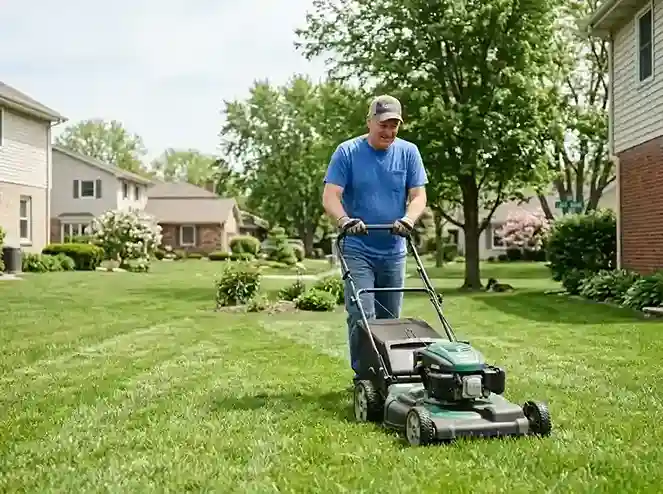
Mowing in the same direction every time causes grass to lean permanently in one direction and can compact the soil along your tire tracks. Alternate between horizontal, vertical, and diagonal patterns across the season to keep grass growing upright and soil healthier.
2. Leave Clippings on the Lawn (When Possible)
Grasscycling — leaving finely mulched clippings on the lawn — returns valuable nitrogen, phosphorus, and potassium back to the soil. Clippings do not cause thatch when managed properly. They can supply up to one free fertilizer application worth of nutrients per season.
3. Never Mow Dormant or Frosted Grass
In late fall, once the grass has gone dormant, stop mowing. Mowing frozen or frosted blades shatters the cellular structure of the grass crown, causing significant winter injury. Always let frost fully thaw before operating any lawn equipment.
4. Keep Your Mower Deck Clean
Grass buildup under the mower deck restricts airflow, causes clippings to clump rather than disperse, and accelerates blade corrosion. Scrape and wash the underside of your deck after every 2–3 uses. This maintenance step also helps you spot blade damage early.
5. Mow Before Fertilizing, Not After
If you’re applying granular fertilizer, mow first. This ensures an even distribution across the soil and prevents fertilizer granules from being blown off-site by mowing turbulence. Wait at least 24–48 hours after liquid fertilizer applications before mowing.
6. Consider Professional Help for Hardscaping Integration
If your yard features walkways, patios, retaining walls, or other hardscaping elements, mowing near them requires precision to avoid damage. Our Trusted Hardscapers team integrates seamlessly with your mowing program to protect your hardscaping investment while maintaining a beautifully edged lawn.
Frequently Asked Questions
Here are the most common questions Kenosha homeowners ask about lawn mowing frequency and mower maintenance:
When to Hire a Professional Lawn Care Service in Kenosha
Even the most dedicated DIY homeowner can benefit from professional lawn care — and in some situations, it’s simply the smarter choice. Consider hiring a professional service if:
- Your schedule doesn’t allow consistent weekly mowing during peak spring growth
- Your property is large enough that mowing takes more than 90 minutes per session
- You have complex landscaping, hardscaping edges, or multiple terrain types that require precision trimming
- You want integrated mowing, fertilization, aeration, and weed control managed as a unified system
- Your lawn has persistent problems (bare patches, disease, weed pressure) that suggest deeper cultural issues
Our team at Lawn Care Kenosha offers fully managed residential lawn care services that include scheduled mowing, edging, trimming, and blowing on a program calibrated to Kenosha’s seasonal growth patterns. We also offer commercial lawn care contracts for businesses, property managers, and HOAs who need reliable, professional maintenance year-round.
For larger landscaping projects, including design, planting, or structural improvements, explore our full suite of Kenosha Landscaping Services. And if you’re considering adding patios, walkways, retaining walls, or other outdoor living features, our Trusted Hardscapers team delivers premium craftsmanship that complements every well-maintained lawn.
Final Thoughts: The Right Mowing Frequency for a Beautiful Kenosha Lawn
The question “how often should you mow your lawn?” doesn’t have a single universal answer — but for Kenosha homeowners, it does have a clear, season-by-season framework. Mow every 5–7 days in spring and early fall, scale back to every 7–14 days in the summer heat, wind down in late fall before the first hard freeze, and let your lawn rest through winter.
Pair that schedule with the one-third rule, consistently sharp blades (sharpened every 20–25 hours of use), regular oil changes (every 50–100 hours or once per season), and smart summer height adjustments (3–3.5 inches during heat), and you’ll have the foundation of a truly great Kenosha lawn.
Whether you’re a dedicated DIYer or ready to hand the reins to a professional, Lawn Care Kenosha is here to help you get the most from every square foot of your yard. From residential and commercial lawn care to comprehensive landscaping services and expert hardscaping, we’re your one-stop partner for the best-looking lawn in the neighborhood.
Ready for a Perfectly Maintained Kenosha Lawn?
Let our expert team handle the mowing, edging, and seasonal care so you can enjoy a beautiful yard without the hassle. Get your free quote today.
View Lawn Care Plans Landscaping Services