Lawn Care Tips for Pleasant Prairie Homeowners (262) 360-0202
Lawn Care Tips for Pleasant Prairie Homeowners
Complete seasonal guidance, the best grass types for Kenosha, and expert tips & tricks for a lush, green Wisconsin lawn year-round.

The best grass types for Kenosha and Pleasant Prairie are Kentucky bluegrass, perennial ryegrass, and fine fescue — all cool-season varieties that thrive in Wisconsin’s Zone 5b climate. Pair the right grass type with a four-season maintenance schedule — early spring cleanup, summer watering discipline, critical fall aeration and fertilization, and smart winter prep — and your lawn will be the envy of the neighborhood.
Best Grass Types for Kenosha & Pleasant Prairie, WI
Choosing the right grass is the single most important lawn care decision you’ll make. Plant the wrong variety and no amount of fertilizing, mowing, or watering will give you the dense, green turf you’re aiming for. Kenosha County sits firmly in USDA Hardiness Zone 5b, with cold winters, hot humid summers, and dramatic spring and fall temperature swings. This climate strongly favors cool-season grasses — varieties that flourish when soil temperatures are between 55°F and 75°F.
Warm-season grasses like Bermuda and zoysia, while beautiful in the South, go brown and dormant too early in Kenosha’s fall and rarely survive our winters reliably. Stick to cool-season species for reliable, four-season performance in Pleasant Prairie, Somers, Bristol, and surrounding areas.
Kentucky Bluegrass
Poa pratensis- Rich blue-green color
- Self-repairs from rhizomes
- Excellent cold hardiness
- Pet and family friendly
- Moderate water needs
- Mow at 3–3.5 inches
Fine Fescue
Festuca spp.- Low maintenance, drought-tolerant
- Thrives in shade and poor soil
- Minimal fertilizer needs
- Soft texture, fine blades
- Great for slopes & wooded lots
- Mow at 2.5–4 inches
Perennial Ryegrass
Lolium perenne- Germinates fastest (5–7 days)
- Excellent traffic tolerance
- Rich dark green color
- Great for overseeding mixes
- Moderate maintenance
- Mow at 2.5–3.5 inches
Comparing Grass Types for Common Kenosha Conditions
| Grass Type | Sun / Shade | Foot Traffic | Drought Resistance | Best Use |
|---|---|---|---|---|
| Kentucky Bluegrass | Full sun; some shade | High — self-repairs | Moderate | General residential lawn |
| Fine Fescue | Partial to full shade | Low to moderate | High | Low-maintenance, shaded yards |
| Perennial Ryegrass | Full sun to light shade | High — tough blades | Moderate | High-traffic areas; overseeding |
| Tall Fescue | Sun to partial shade | Moderate to high | High | Transition areas; varied soil |
Most Kenosha lawns thrive on a seed blend — typically 60–70% Kentucky bluegrass plus 20–30% perennial ryegrass and a small amount of fine fescue. The mix leverages the self-repairing strength of bluegrass, the fast establishment of ryegrass, and the shade tolerance of fescue. Our residential lawn care team selects blends based on each property’s sun exposure, soil type, and traffic patterns.
Lawn Care Tips for Beginners in Pleasant Prairie
If you’re new to lawn care — whether you’ve just moved to Pleasant Prairie or finally decided to take ownership of a neglected yard — these foundational lawn care tips for beginners will give you the best possible start. The core principles are simpler than you might think, and mastering them delivers 80% of your results.
The 5 Rules Every Kenosha Beginner Must Know
- Never cut more than one-third of the blade height at one time. Removing more than a third stresses the grass severely, inviting disease and weed invasion. Set your mower to 3 inches and mow more frequently during peak growth rather than cutting down to 2 inches once a month.
- Water deeply, not daily. Frequent shallow watering produces shallow roots. Instead, apply 1–1.5 inches of water per week in one or two deep sessions, ideally in the early morning. Deep watering drives roots 4–6 inches into the soil, making your lawn more drought-tolerant and disease-resistant.
- Feed your lawn in fall, not just spring. Many beginners fertilize heavily in spring and skip fall — which is the opposite of what cool-season grass in Kenosha needs. Fall feeding banks nutrients in the root system for explosive spring green-up.
- Soil test before you buy fertilizer. A $15–$25 soil test from your local cooperative extension tells you exactly what your lawn is missing. You may be buying and applying phosphorus when your soil is already high — and Wisconsin law restricts it anyway.
- Sharpen your mower blades every season. A dull blade tears grass rather than cutting it cleanly, leaving ragged, brown tips that are entry points for disease. A clean cut seals the blade end and keeps the lawn looking lush.
Scalping the lawn in spring — cutting it extremely short after winter — is one of the most common and damaging beginner mistakes in Kenosha. It removes the stored energy in the blades, exposes soil to weed seeds, and puts the grass under severe stress heading into its first growth push. Keep it at 3 inches minimum, even early in the season.
Spring Lawn Care Tips for Pleasant Prairie
Spring is the most exciting — and most mismanaged — season for Wisconsin lawns. The urge to get out and work as soon as temperatures climb is understandable, but the most effective spring lawn care tips are about patience and sequence as much as action.
The Correct Spring Lawn Care Sequence
- Late March – Early April: Tune up equipment, sharpen blades, and do a light cleanup rake to remove matted leaves, winter debris, and any signs of snow mold. Don’t rake aggressively — you risk tearing up turf that’s still brittle from frost cycles.
- April (when soil reaches 50°F): Apply pre-emergent crabgrass herbicide. This is one of the most high-value actions in your spring calendar. Miss this window and you’ll spend all summer battling crabgrass. Soil temperature, not calendar date, is the trigger.
- Late April – May (when soil reaches 55°F): Begin your spring mowing program. Start with a slightly lower cut to remove winter-damaged tips, then raise to your regular height (3–3.5 inches).
- Late April – May: Apply spring fertilizer — a slow-release nitrogen formula at ¾ lb N per 1,000 sq ft. Don’t apply before soil hits 55°F, as nutrients won’t be absorbed efficiently by dormant roots.
- May: If bare patches are present, overseed with a matching grass blend. Spring overseeding is less ideal than fall but still effective when done before summer heat arrives.
✅ Spring Do List
- Clean up winter debris
- Pre-emergent before crabgrass season
- Soil test & pH check
- Slow-release spring fertilizer
- Raise mower height to 3–3.5″
- Patch bare spots with seed
- Schedule professional aeration
🚫 Spring Don’t List
- Don’t fertilize on frozen ground
- Don’t scalp the lawn short
- Don’t skip pre-emergent timing
- Don’t use quick-release nitrogen on new growth
- Don’t overseed right after pre-emergent
- Don’t water in evening (fungal risk)
Early Spring Lawn Care Tips: March & April in Kenosha
Early spring — the window between last frost and consistent 55°F soil temperatures — is its own distinct phase that requires different care than mid or late spring. These early spring lawn care tips are specific to Kenosha’s late-winter-into-spring transition, which can be wildly variable year to year.
What to Do in March in Kenosha
In March, your primary task is observation, not action. Walk your property and note: areas of snow mold (pink or grey circular patches where grass appears matted and grey), any standing water drainage issues, and spots where ice caused damage. Document these so you can treat them properly in April.
March is also the time to service your lawn equipment. A freshly sharpened mower blade, clean air filter, and fresh oil go a long way toward ensuring a clean first cut of the season.
What to Do in April in Kenosha
April is your first real action month. Springtime lawn care tips for early April center on light raking to dethatch matted areas from winter, applying pre-emergent herbicide when soil hits 50°F (typically in the first half of April in Pleasant Prairie), and beginning your watering schedule if spring rains are below average. By late April, as soil approaches 55°F, you’re ready for the first mow and light fertilization.
Pleasant Prairie’s proximity to Lake Michigan creates a natural temperature moderating effect — springs tend to warm slightly later than areas 20 miles inland. Don’t rush spring fertilization based on what friends in Waukesha or Madison are doing. Monitor your own soil temperature with a $15 soil thermometer before acting.
Summer Lawn Care Tips for Kenosha Homeowners
Summer in Kenosha brings heat, humidity, occasional drought, and lawn pests — all working against your cool-season grass at once. The best summer lawn care tips are largely defensive: protect what you’ve built in spring, minimize stress, and set the lawn up for a strong fall recovery.
☀️ June – July Priorities
- Mow at 3.5–4″ to shade soil
- Water 1–1.5″ per week (deep, infrequent)
- Water early morning only
- Scout for grubs and chinch bugs
- Spot-treat broadleaf weeds
- Avoid heavy nitrogen fertilization
🌤️ August Priorities
- Reduce mowing frequency as growth slows
- Begin grub control before Labor Day
- Plan fall aeration and overseeding
- Scouting for turf fungus patches
- Late August: resume fertilization
- Pre-emergent for fall annual weeds
Summer Watering: The Deep-and-Infrequent Method
The most impactful of all lawn care tips and tricks for summer is watering deeply and infrequently rather than lightly every day. Daily shallow watering keeps the soil moist only in the top inch — exactly where shallow, weak roots develop. By contrast, applying 1–1.5 inches of water twice weekly drives moisture 4–6 inches into the soil, training roots to grow deep where temperatures are cooler and moisture is more stable.
Always water in early morning (6–9 AM). Evening watering keeps blades wet overnight, creating ideal conditions for fungal diseases like dollar spot, brown patch, and red thread — all common in Kenosha’s humid summer climate.
Summer Pests: What to Watch For
Japanese beetle grubs are the most destructive summer lawn pest in the Kenosha area. The grubs feed on grass roots from mid-July through September, leaving brown patches that pull up like loose carpet. Preventive grub treatments applied in June–July (before eggs hatch) are far more effective than curative treatments in August–September after damage is visible. Our commercial and residential lawn care programs include grub monitoring as a standard service.
Fall & Autumn Lawn Care Tips: The Most Critical Season
If you follow only one season’s worth of advice from this guide, make it fall. Fall lawn care tips for Kenosha are more impactful than any other season’s because this is when cool-season grasses are growing most vigorously — building root mass and storing carbohydrates for spring green-up. Everything you do this fall determines how your lawn looks next April.
The Fall Lawn Care Priority List
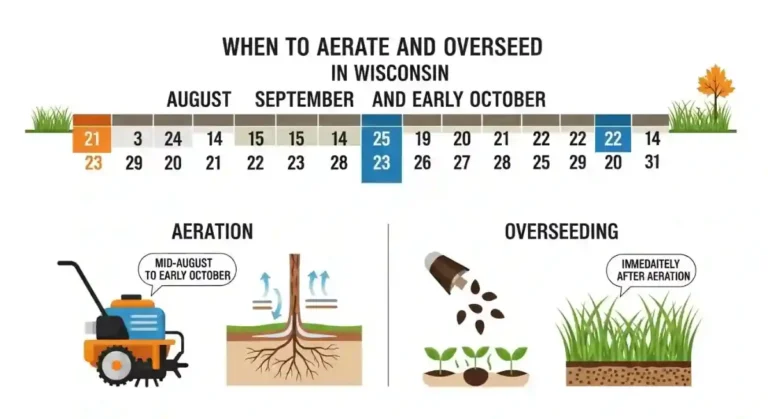
- Core Aeration (Late August – September): Relieve soil compaction accumulated from summer foot traffic and heat. Core aeration removes plugs of soil, opening channels for fertilizer, water, and oxygen to penetrate the root zone. This is the single highest-ROI lawn care action in Kenosha’s clay-heavy soils.
- Overseeding (Immediately After Aeration): Spread a matching cool-season seed blend over thin or bare areas right after aerating. The open cores give seeds direct soil contact for excellent germination. Late summer–early fall soil temperatures (65–70°F) are ideal for germination of Kentucky bluegrass and ryegrass.
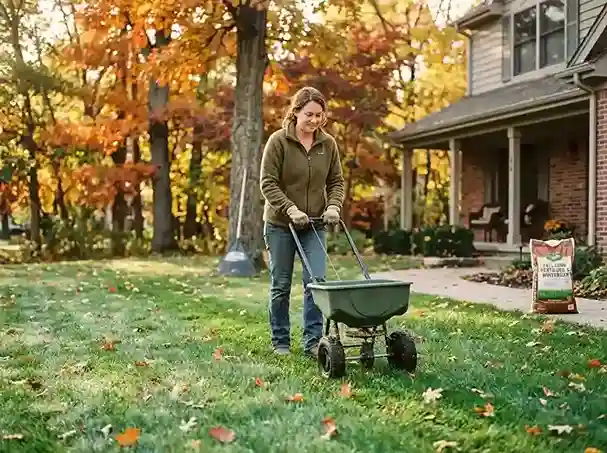
- Primary Fall Fertilization (Around Labor Day): This is the most important fertilizer application of the year for Kenosha lawns. Apply a slow-release nitrogen fertilizer at ¾–1 lb N per 1,000 sq ft. The grass absorbs this feeding during its fall growth flush and stores nutrients in roots for spring.
- Winterizer Application (Late October – Early November): A second fall feeding with higher potassium content (e.g., 12-0-12) strengthens cell walls for cold hardiness and improves disease resistance through winter.
- Mulch Leaves (Don’t Rake Them): Run your mower over fallen leaves and let the shredded fragments decompose on the lawn. They add organic matter and nutrients to the soil — equivalent to a light fertilizer application. Only rake if leaf cover is so thick it blocks sunlight from the grass.
- Final Mow at 2.5 inches: For the very last mow of the season, drop to 2.5 inches. This prevents matting and significantly reduces snow mold risk over winter.
The window from mid-August through mid-October is when our Lawn Care Kenosha team is busiest — and for good reason. Autumn lawn care in Kenosha is not optional maintenance; it’s the backbone of a healthy lawn. Homeowners who invest in fall aeration, overseeding, and proper fertilization consistently have thicker, greener, weed-resistant lawns the following spring compared to those who rely solely on spring applications.
Winter Lawn Care Tips for Pleasant Prairie
Wisconsin winters are hard on turf. Freezing temperatures, heavy snow load, road salt spray, and ice can all cause significant lawn damage — but smart winter lawn care tips minimize injury and ensure you’re ready to hit the ground running in spring.
Before the Ground Freezes
Complete your final mow, winterizer application, and leaf cleanup before the ground freezes (typically late October to mid-November in Kenosha). Store fertilizer indoors in a dry place. Drain and winterize irrigation systems to prevent pipe damage. Mark the edges of your driveway and walkways with driveway reflectors so plow operators don’t damage your lawn edges.
During Winter
- Minimize foot traffic on frozen or snow-covered grass. Frozen grass blades are rigid and brittle — foot traffic crushes them, killing individual plants and creating bare areas that weeds colonize in spring.
- Avoid road salt near lawn edges. Sodium chloride from sidewalk and driveway deicing is one of the top causes of brown strip damage along driveways in Pleasant Prairie. Use calcium chloride (gentler) or sand near grass edges, and flush the area thoroughly in early spring.
- Keep heavy snow piles off the lawn when possible. Repeatedly deposited snow from plowing creates compaction and late snow mold conditions. Distribute snow across a wider area if you can.
- Plan your spring program. Winter is the ideal time to research grass seed blends, order soil test kits, schedule a spring aeration appointment (they book early), and review your lawn care budget. Early planning pays off.
Snow mold is a fungal disease that develops under snow on lawns that went into winter too long (over 3 inches). It appears as circular grey or pink patches in early spring as snow melts. Preventing it is far easier than treating it: final mow at 2.5 inches, mulch leaves thoroughly, and avoid excessive late-fall nitrogen applications.
Pleasant Prairie Lawn Care Monthly Calendar
This calendar distills all seasonal advice into a clear, month-by-month action plan for Kenosha County lawns. Bookmark it and check back at the start of each month.
No action. Plan spring program. Order soil test kit. Service equipment.
Scout for snow mold. Light cleanup when ground is firm. Tune up mower.
Pre-emergent at 50°F. Begin mowing. Soil test. Repair winter damage.
Spring fertilize at 55°F+. Overseed bare spots. Mow at 3–3.5″.
Deep watering starts. Spot weed control. Light optional feeding.
Mow high. Early morning watering only. Grub preventive treatment.
Late Aug: Resume fertilizing. Plan aeration. Scout for grub damage.
Aerate + overseed. Primary fall fertilizer (Labor Day). Optimal growth.
Winterizer fertilizer. Mulch leaves. Lower final mow to 2.5″.
Final cleanup. Drain irrigation. Mark driveway edges. Store equipment.
Minimize foot traffic. Avoid salt near lawn. Review spring plan.
Green Lawn Care Tips: Eco-Friendly Practices for Kenosha
Kenosha’s position along Lake Michigan creates a special environmental responsibility. Lawn chemicals that run off into storm drains ultimately reach the lake. These green lawn care tips protect both your lawn’s long-term health and the local watershed.
- Use phosphorus-free fertilizer on established lawns. Wisconsin law restricts phosphorus application unless a soil test demonstrates deficiency. Most Kenosha soils are already high in phosphorus — look for formulas with a “0” as the middle number (e.g., 28-0-6).
- Mulch grass clippings back into the lawn. Returning clippings provides up to 1 lb of nitrogen per 1,000 sq ft per year — essentially a free fertilization. It’s the single easiest and most effective green lawn care practice.
- Compost, don’t bag, your leaves. Shredded leaves are organic matter and micronutrients in free form. Run over them with a mulching mower rather than filling trash bags.
- Water smart. Use a rain gauge to track natural rainfall and only irrigate when weekly totals fall below 1 inch. A $10 rain gauge saves thousands of gallons per season and avoids the overwatering conditions that promote fungal disease.
- Overseed with improved varieties. Modern grass seed cultivars require 30–40% less water and are more disease-resistant than older varieties. When overseeding, choose endophyte-enhanced perennial ryegrass and improved Kentucky bluegrass cultivars — they’re naturally more pest-resistant.
Our Kenosha Landscaping Services team integrates eco-friendly practices into every program — from organic fertilizer options to water-efficient irrigation design. The same principles apply to the hardscape areas of your property: our Trusted Hardscapers design permeable patio and walkway solutions that reduce runoff and improve stormwater management across your entire property.
Tipping Your Lawn Care Service: What’s Appropriate?
A common question from Pleasant Prairie homeowners: should you tip your lawn care service, and if so, how much? While tipping a lawn care service is entirely optional — unlike tipping in a restaurant setting — it’s a genuinely appreciated gesture for crews who work in Wisconsin’s heat, cold, and humidity season after season.
General Tipping Guidelines
| Service Type | Suggested Tip | When to Give |
|---|---|---|
| Regular weekly mowing crew | $20–$50 per crew member | End of season (October) |
| One-time large project (aeration, cleanups) | 10–15% of job total | Day of service |
| Special service in extreme conditions | $15–$30 per worker | Day of service |
| Holiday / Year-end bonus | $25–$100 | November – December |
Beyond cash, a positive Google review or a referral to a neighbor is one of the most meaningful ways to show appreciation for a local lawn care company. It directly supports their business and helps them keep serving the Kenosha community. If you’re satisfied with your residential lawn care services, leaving a review for Lawn Care Kenosha means the world to our team.
Lawn Care Tips and Tricks: Advanced Strategies for a Championship Kenosha Lawn
Once you have the fundamentals dialed in, these advanced lawn care tips and tricks separate good Kenosha lawns from great ones.
Double-Cut in Fall for Faster Green-Up
In late October, before your final mow of the season, do two overlapping mowing passes at 90-degree angles at 2.5 inches. This removes excess leaf debris efficiently, creates a clean surface for winter, and dramatically reduces the spring cleanup burden. Lawns that go into winter clean and at the right height green up 2–3 weeks faster in spring.
Topdress with Compost Every 2–3 Years
Spreading a thin layer (¼ inch) of quality compost over your lawn after aeration in fall is one of the most powerful long-term soil improvement techniques available. Over time, it improves drainage in clay soils, increases microbial activity, raises organic matter content, and reduces the amount of synthetic fertilizer needed. Our commercial lawn care clients who invest in annual or biennial compost topdressing consistently require fewer inputs over time.
Overseed Every 3–5 Years
Even a healthy lawn benefits from overseeding every 3–5 years with the latest improved grass cultivars. Modern varieties have significantly better disease resistance, heat tolerance, and visual quality than older types. Overseeding keeps the lawn dense, which is your primary natural defense against weeds — a thick lawn shades weed seeds and prevents germination without herbicides.
Establish a Buffer Zone with Hardscaping
The transition between your lawn and hard surfaces (driveways, paths, patios) is where maintenance is most intensive. Installing proper edge restraints, decorative borders, or hardscape features in these transition zones reduces the frequency of edging, prevents grass from spreading into beds, and gives your property a polished, professional look. Our Hardscaping experts design borders, step stones, and edging solutions that complement your lawn while reducing ongoing maintenance burden.
Lawn Care Business Tips: For Kenosha Property Managers
If you manage multiple properties or a commercial site in Kenosha County, professional lawn care business tips apply: consolidate services under a single provider for consistent results and better pricing, schedule multi-year commercial lawn care contracts to lock in pricing and service priority, and request written seasonal programs that specify exact application dates and products. A documented program protects both parties and ensures continuity even when staff changes. Our commercial and residential lawn care team works with HOAs, apartment complexes, retail centers, and individual homeowners across Kenosha County with fully documented, performance-based programs.
Frequently Asked Questions
What is the best grass type for Kenosha, Wisconsin?
Kentucky bluegrass is the most popular choice for Kenosha lawns — it’s self-repairing, cold-hardy, and produces a beautiful dense turf. Fine fescue is ideal for shaded or low-maintenance yards. Most lawns perform best with a blend of all three cool-season varieties. Contact our Lawn Care Kenosha team for a property-specific recommendation.
When should I start spring lawn care in Pleasant Prairie?
Begin in early April when soil firms up and pre-emergent timing approaches (50°F soil temp). Wait until soil hits 55°F before fertilizing — typically late April to mid-May. Rushing spring care before the grass is ready produces shallow roots and increased disease risk.
What are the top summer lawn care tips for Wisconsin?
Mow high (3.5–4 inches), water 1–1.5 inches per week in early morning, apply a preventive grub control in June–July, and avoid heavy nitrogen fertilization during heat waves. Cool-season lawns naturally slow in July–August — this is normal, not a cause for alarm.
What fall lawn care should I prioritize in Kenosha?
Core aeration in late August or September, followed immediately by overseeding. Apply your primary fall fertilization around Labor Day. Add a winterizer in late October. Mulch leaves with your mower. Final mow at 2.5 inches. Fall is the single most impactful season for cool-season lawns in Wisconsin.
How do I protect my lawn in winter in Pleasant Prairie?
Minimize foot traffic on frozen grass, avoid road salt near lawn edges, keep heavy snow piles spread rather than piled, and ensure your lawn went into winter at 2.5 inches with leaves cleared. Plan your spring program during the winter months.
Should I tip my lawn care service?
Tipping is optional but appreciated. A $20–$50 end-of-season tip per crew member for regular mowing service, or 10–15% on larger projects, is a generous gesture. A positive online review or neighbor referral is equally meaningful for a local company like Lawn Care Kenosha.
What are the best eco-friendly lawn care tips for Kenosha?
Use phosphorus-free fertilizer (Wisconsin law), mulch grass clippings and leaves, use a rain gauge to avoid overwatering, and overseed with modern drought-resistant cultivars. These green lawn care practices protect Lake Michigan and reduce your lawn’s long-term input needs.
Do I need professional lawn care in Pleasant Prairie?
Many homeowners successfully maintain their own lawns with the right knowledge. However, for aeration, overseeding, grub control, and multi-step seasonal programs, professional residential lawn care services deliver consistent results and save significant time. Our team serves all of Pleasant Prairie, Somers, and Kenosha County.