
Lawn Aeration vs Overseeding in Wisconsin: Which Does Your Kenosha Lawn Really Need?
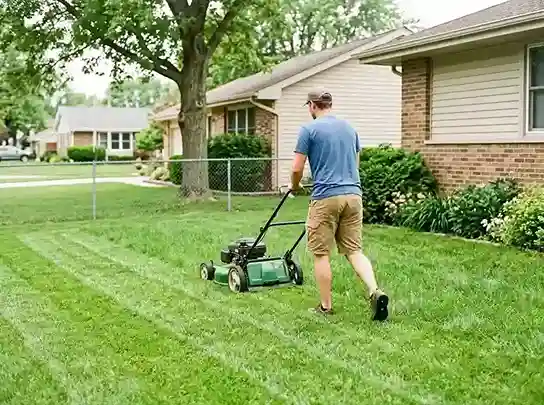
Every spring and fall, Kenosha homeowners face the same question: should I aerate my lawn, overseed it, or do both? Walk into any lawn and garden center and you’ll find rows of machines — plug aerators, spike aerators, slit seeders, overseeder attachments, aerator shoes, tow-behind rollers — each promising a greener, thicker lawn. The options are overwhelming, and choosing the wrong one wastes money and time.
This guide cuts through the noise. We explain exactly what each process does, compare every major tool pairing — overseeder vs aerator, spike vs plug aerator for overseeding, aerator shoes vs roller for overseeding, slice seeding vs aeration overseeding, and more — and tell you precisely what works for Wisconsin’s heavy clay soils, harsh winters, and short growing windows. Whether you’re a Kenosha homeowner managing your own yard or shopping for an overseeding vs core aeration package near Kenosha, this is the resource you’ve been looking for.
1. What Is Lawn Aeration?
Lawn aeration is the process of perforating the soil with small holes — or, in the case of core aeration, removing cylindrical plugs of soil — to allow air, water, and nutrients to penetrate deep into the root zone. Over time, foot traffic, heavy rainfall, freeze-thaw cycles, and clay-dense soils cause compaction. Compacted soil acts as a physical barrier, preventing roots from expanding and choking off the oxygen and moisture your grass depends on.
There are two primary forms of lawn aeration:
Core (Plug) Aeration
A machine uses hollow tines to physically remove 2–4 inch cylinders of soil and deposit them on the lawn surface. The holes remain open, allowing direct access for water, air, fertilizer, and grass seed. Plugs decompose within two to four weeks, returning nutrients to the soil. This is the gold-standard method for Kenosha’s compaction-prone clay soils.
Spike Aeration
Solid tines, spikes, or shoes punch holes into the soil without removing any material. The surrounding soil is compressed outward rather than extracted — which can actually worsen compaction around each hole over time. Spike aeration is useful for very light maintenance on sandy or healthy soils but is not recommended as a primary treatment for struggling Wisconsin lawns.
Wisconsin Fact: The University of Wisconsin Extension recommends aerating cool-season lawns in early autumn (September 1–30) as the primary window, with a secondary spring window from May 1 to June 15. Fall aeration aligns perfectly with overseeding for maximum germination before winter.
2. What Is Overseeding?
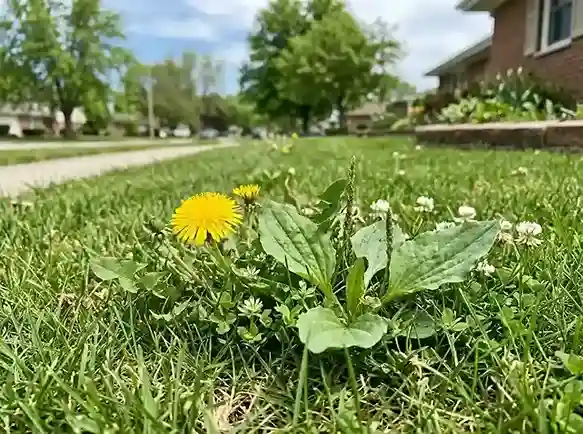
Overseeding is the practice of spreading grass seed over an existing lawn — without tilling up the turf — to thicken the stand, fill bare or thin patches, and introduce newer, disease-resistant grass varieties. It is one of the most cost-effective ways to rejuvenate an aging Kenosha lawn without a full renovation.
Overseeding works on the simple principle of numbers: more healthy grass plants per square foot means less room for weeds, better drought tolerance, and a richer visual appearance. In Wisconsin, where Kentucky bluegrass, tall fescue, and fine fescue blends dominate cool-season turf, overseeding also allows you to blend in more resilient, modern cultivars that handle our temperature extremes better than older seed varieties.
The critical challenge with overseeding is seed-to-soil contact. Grass seed scattered on top of dense turf, thatch, or dry topsoil will often fail to germinate because the seed never reaches mineral soil. This is the primary reason aeration and overseeding are so frequently paired together — the holes left by a core aerator create ready-made seed beds that boost germination rates dramatically.
3. Lawn Aeration vs Overseeding — Key Differences at a Glance
These are two distinct lawn care practices that target different problems. Understanding their individual roles helps you decide whether your lawn needs one or both.
| Factor | Lawn Aeration | Overseeding |
|---|---|---|
| Primary Goal | Relieve soil compaction; improve oxygen, water & nutrient flow to roots | Thicken grass stand; fill thin or bare areas with new grass plants |
| Main Equipment | Core aerator (plug) or spike aerator | Drop spreader, slit seeder, or overseeder machine |
| Addresses Compaction | ✓ Yes | ✗ No |
| Adds New Grass Seed | ✗ No | ✓ Yes |
| Improves Soil Structure | ✓ Yes | Indirectly (roots add organic matter) |
| Reduces Thatch | ✓ Partially | ✗ No |
| Enhances Overseeding Results | ✓ Significantly | — |
| Best Wisconsin Timing | Sept 1–30 (primary) or May–June (secondary) | Late Aug – mid-Sept for cool-season grasses |
| Visible Recovery Time | 2–4 weeks (plugs decompose) | 7–21 days (germination), 6–8 weeks (establishment) |
| Frequency | Annually (clay soils); every 2–3 yrs (sandy) | Every 2–3 years or as needed for thin areas |
| Cost Relative | Moderate (equipment rental or service) | Lower to moderate (seed cost + spreader) |
| Best Combined With | Overseeding + fall fertilization | Core aeration + starter fertilizer |
The takeaway is clear: aeration and overseeding solve different problems, but they are most powerful when done together. Aerate first, then overseed into the holes for the best germination results. This combined approach is what the lawn care professionals at Lawn Care Kenosha recommend for the vast majority of residential lawns in the area.
4. Overseeder vs Aerator — Understanding the Equipment
A major source of homeowner confusion is the difference between an overseeder machine and an aerator machine. They look superficially similar — both are large, walk-behind units — but they do fundamentally different things.
What an Aerator Does
A core aerator uses a rotating drum studded with hollow tines. As it moves across your lawn, the tines punch into the soil and extract plugs 2 to 4 inches deep. The machine does not distribute seed; it purely prepares the soil. Aerators are heavy machines — often 200 to 400 pounds — designed for soil penetration, not seed distribution. You can rent them from most home improvement or equipment rental shops in the Kenosha area.
What an Overseeder Does
A dedicated overseeder (sometimes called a slit seeder or slice seeder) uses rotating vertical blades to cut thin furrows into the soil, then drops grass seed directly into those slits. The seed makes immediate contact with mineral soil, which dramatically improves germination compared to broadcasting seed on top of existing turf. However, a standalone overseeder does not relieve compaction — the slits it creates are narrow and do not open the soil profile the way core aeration does.
The Bobcat Overseeder vs Aerator Debate
If you’re looking at contractor-grade equipment, you may encounter comparisons between a Bobcat overseeder attachment versus a dedicated aerator. Bobcat overseeders are powerful, efficient, and reduce the number of passes needed — but they are still primarily seeding tools. For severely compacted Kenosha lawns with high clay content, running a dedicated core aerator first and then following with any overseeder (Bobcat-mounted or stand-alone) produces superior results compared to an overseeder-only pass.
Common Mistake: Using only an overseeder machine without aerating first on compacted clay soil. The slits close quickly in dense Wisconsin clay, and seed-to-soil contact suffers. Core aerate first — always.
5. Spike vs Plug Aerator for Overseeding — Which Wins?
If you’ve decided to aerate before overseeding, the next question is whether to use a spike aerator or a plug (core) aerator. This comparison matters enormously for your overseeding results.
| Feature | Spike Aerator | Plug (Core) Aerator |
|---|---|---|
| Soil Removal | No — pushes soil aside | Yes — extracts cores |
| Hole Longevity | Closes quickly in clay | Remains open 4–6 weeks |
| Compaction Relief | Temporary; may worsen long-term | Genuine, lasting relief |
| Overseeding Suitability | Poor on clay; mediocre on sand | Excellent — open holes = seed pockets |
| Penetration Depth | Shallow (1–2 in) | Deep (2–4 in) |
| Best Soil Type | Sandy, lightly compacted | Clay-heavy, moderately to heavily compacted |
| Equipment Cost | Low (shoes ~$20; push aerator ~$60) | Higher (rental ~$80–$120/day or service) |
| Recommended for Kenosha? | Marginal maintenance only | Yes — strongly recommended |
The verdict: for overseeding on Wisconsin’s clay-rich soils, a plug aerator is the clear winner. The open channels created by core extraction give seeds a protected, moist micro-environment with direct mineral soil contact. Spike aerators simply compress the existing soil structure, often making the hole walls too hard for seeds to establish roots. Lawn care professionals consistently recommend plug aeration when overseeding is the follow-up treatment.
6. Lawn Aerator Shoes vs Roller for Overseeding
At the consumer level, two popular spike-based options often come up: aerator shoes (strap-on sandals with metal spikes you walk across your lawn) and rolling push aerators (a wheeled drum covered in spikes). Neither is ideal for overseeding on compacted clay soil, but understanding the difference helps you decide whether either is useful as a supplemental tool.
Aerator Shoes
Aerator shoes strap over your regular footwear. Their 2-inch spikes create superficial holes as you walk. For a small lawn in good condition with sandy or loamy soil, aerator shoes can provide a marginal boost to water penetration. For overseeding purposes, however, they are essentially cosmetic — the holes are too shallow and too inconsistent for meaningful seed-to-soil contact. On clay soil, the spikes increase lateral compaction with every step.
Rolling Push Aerators
Rolling aerators feature a drum of spikes that punctures the soil as you push it across the lawn. They are faster than aerator shoes and create more uniform spacing, but they still suffer from the core limitation of spike aeration: no soil is removed. The holes close relatively quickly, especially in moist Wisconsin spring or fall soils. For overseeding, rolling spike aerators are a poor substitute for a core aerator. If budget is the concern, your money is far better spent renting a core aerator for a day.
Bottom line on aerator shoes vs roller for overseeding: Neither is a good choice for serious overseeding in Kenosha’s clay soils. Use them only for light annual maintenance on already-healthy, sandy lawns — and pair any overseeding project with a proper plug aerator instead.
7. Slice Seeding vs Aeration Overseeding — What’s the Difference?
Both slice seeding and aeration-then-overseeding are popular renovation methods, and both are far superior to simply broadcasting seed on undisturbed turf. But they work differently, and one may suit your situation better.
Slice Seeding (Slit Seeding)
A slit seeder uses vertical rotating blades to cut narrow furrows — typically 0.25 to 0.5 inches wide — directly into the soil. Seed is deposited into these slits in the same pass. This creates immediate, intimate seed-to-soil contact without requiring a separate overseeding step. The University of Wisconsin Extension describes slit seeding as “the ideal way to overseed thin lawns over decent soil conditions, as seed is placed directly into the soil in slits cut through surface debris.”
Slice seeding is highly efficient and delivers reliable germination. However, it does not address soil compaction. If your lawn’s core problem is compacted clay soil — common throughout Kenosha and Racine counties — slice seeding alone will produce germination in the slits, but the surrounding soil will remain hard, limiting root development and long-term turf density.
Aeration + Overseeding
This two-step approach aerates first, creating hundreds of open soil plugs per square foot, then broadcasts seed across the entire surface. Many seeds fall directly into the aeration holes, where they find protected, moist soil and outstanding germination conditions. The remaining seed settles into existing turf gaps. The aeration step also decompacts the soil profile, benefits that carry forward for weeks or months.
The aeration-plus-overseeding combo also pairs well with fertilization: the open plugs allow starter fertilizer and water to penetrate directly to the root zone, maximizing early growth. This is why most residential lawn care services in Wisconsin recommend the combined package as the default fall renovation treatment.
| Factor | Slice Seeding | Aeration + Overseeding |
|---|---|---|
| Seed-to-Soil Contact | Excellent (direct slit placement) | Very Good (hole-plus-surface broadcast) |
| Compaction Relief | None | Yes (core aeration) |
| Passes Required | 1–2 passes (2 directions) | 2 separate operations |
| Best For | Thin lawns on decent soil | Compacted or clay-heavy lawns |
| Wisconsin Recommendation | Moderate to high clay: supplement with aeration | Strongly recommended for Kenosha-area clay |
| Seed Rate Efficiency | Very high (minimal seed waste) | High (some seed on thatch; most reaches soil) |
8. Dethatching vs Aerating for Overseeding — Do You Need Both?
Thatch is the layer of dead and living organic matter — roots, stems, and debris — that accumulates between the green grass blades and the soil surface. A thin thatch layer (under half an inch) is actually beneficial, insulating the soil and retaining moisture. When it exceeds half an inch, however, it acts as a physical barrier that prevents water, fertilizer, and seed from reaching the soil.
When to Dethatch Before Overseeding
If your thatch layer measures more than half an inch, dethatching before aerating and overseeding is worth the extra step. A power rake or vertical mower removes the excess organic mat, and the subsequent core aeration creates channels through what remains. This triple-pass approach — dethatch, aerate, then overseed — delivers the highest germination rates for heavily thatched lawns.
When Aeration Alone Is Enough
For lawns with moderate thatch (under half an inch), core aeration alone does a reasonable job of managing thatch. The hollow tines puncture through the thatch layer, and the soil plugs left on the surface contain microorganisms that help break down organic matter. In many cases, Kenosha homeowners who aerate annually find their thatch remains well-managed without a separate dethatching step.
Timing note: Never dethatch and overseed in the same week as applying a pre-emergent herbicide. Pre-emergents prevent germination of all seeds — including the grass seed you’ve just spread. If weed control is needed, consult your residential lawn care service about sequencing treatments properly.
9. Overseeding Tiller vs Aerator — When Would You Use a Tiller?
A garden tiller turns and breaks up soil to a depth of 6 to 12 inches. It is not a tool for overseeding an established lawn — it is a renovation tool. Using a tiller on an existing turf destroys all current grass plants and mixes them into the soil, which is a complete lawn renovation, not overseeding.
Here’s when each tool is appropriate:
-
AUse an Aerator (Core Aerator)
When your existing lawn has 50% or more desirable grass and you want to thicken it, improve compaction, and overseed thin areas. This preserves your existing turf investment and is suitable for the vast majority of Kenosha residential lawns.
-
BUse a Tiller (Full Renovation)
When your existing lawn is dominated by weeds (more than 50%), severely diseased, or so severely compacted and depleted that it cannot be salvaged by overseeding alone. Tilling removes everything and allows you to start fresh — adding amendments, grading, and re-establishing from bare soil. This is a much more involved and expensive process.
In the Kenosha area, full tiller renovations are occasionally needed on newly constructed homes where the soil is contractor-grade fill, or on properties that have been severely neglected. For most established residential lawns, core aeration followed by overseeding is the appropriate and far less disruptive choice. Our team at Lawn Care Kenosha can assess your lawn and recommend the right approach at no obligation.
10. Overseeding vs Core Aeration Package Near Kenosha — What Should You Expect?
When shopping for lawn care and maintenance services in the Kenosha area, you’ll typically encounter three main service configurations:
Core Aeration Only
A technician runs a plug aerator across your lawn in one or two passes. Cores are left to decompose naturally. Best for lawns that are adequately thick but compacted — or as part of an ongoing annual maintenance program.
Overseeding Only
Seed is broadcast or slit-seeded across your existing turf. Most effective on lawns with good soil quality, minimal thatch, and light compaction. Less impactful on heavy clay soils without prior aeration.
Aeration + Overseeding Package
The recommended combination for most Kenosha lawns. Core aeration is performed first, then quality grass seed is broadcast across the aerated surface. Starter fertilizer is often included. This is the highest-return treatment for thin, tired, or compacted Wisconsin lawns.
For commercial lawn care contracts and larger properties, professional crews can cover large acreage efficiently using commercial-grade ride-on aerators and broadcast spreaders. The economics of a combined package almost always beat the cost of handling aeration and overseeding as separate service calls. Whether you need commercial and residential lawn care in Kenosha, our team is equipped for both.
11. Best Time to Aerate and Overseed in Wisconsin
Timing is everything in Wisconsin. Get it right and your grass rewards you with thick, vibrant turf. Get it wrong and expensive seed washes away or fails to germinate before the first frost.
-
1Late August — Pre-season Prep
Late August marks the opening of Wisconsin’s ideal fall renovation window. Soil is still warm from summer, nights are beginning to cool, and cool-season grasses are transitioning back into active growth. This is the moment to schedule your aeration service and purchase quality grass seed.
-
2September 1–15 — Peak Window
The University of Wisconsin Extension identifies this as the single best period for overseeding and aeration across the state. Cool nights combined with warm soil temperatures (still above 50°F) create near-ideal germination conditions. Seed sown now has six to eight weeks to establish roots before winter dormancy — enough time for strong establishment.
-
3September 15 – October 1 — Still Viable
Germination becomes less reliable as soil temperatures drop and nights get colder. Overseeding can still be done, but results will be less consistent. Priority goes to bare or badly thin patches that cannot wait until spring.
-
4May 1 – June 15 — Spring Window
Spring aeration and overseeding is the secondary option. Soils are drying out from snowmelt, roots are recovering from winter stress, and grass is entering active growth. The risk in spring is that germinating seedlings face increased weed pressure as crabgrass and broadleaf weeds compete for the same space. Never apply pre-emergent herbicides if overseeding in spring.
Kenosha Pro Tip: Water your lawn to about an inch depth two days before scheduled core aeration. Slightly moist soil allows tines to penetrate deeply and pull clean cores. Saturated soil clogs the tines; bone-dry summer clay can be too hard to penetrate to effective depth.
12. The Winning Process: Aeration + Overseeding Step by Step
Here is the exact sequence our residential lawn care professionals follow for fall renovation in the Kenosha area:
-
1Mow Short (2.5–3 inches)
Cut your lawn slightly shorter than usual — around 2.5 to 3 inches — a day or two before aeration. This removes excess material that would interfere with the aerator and allows the tines to reach the soil more effectively.
-
2Mark Sprinkler Heads and Buried Utilities
Flag all irrigation heads, invisible dog fence lines, and any shallow buried utilities before the aerator rolls. Core aerator tines can damage plastic irrigation components if they’re not clearly marked.
-
3Core Aerate — Two Passes
Run the core aerator across the entire lawn, making two passes at right angles to each other. Two-directional passes achieve 15 to 20 cores per square foot — the density recommended by the University of Wisconsin Extension for meaningful compaction relief. Leave the plugs on the surface.
-
4Broadcast Quality Grass Seed
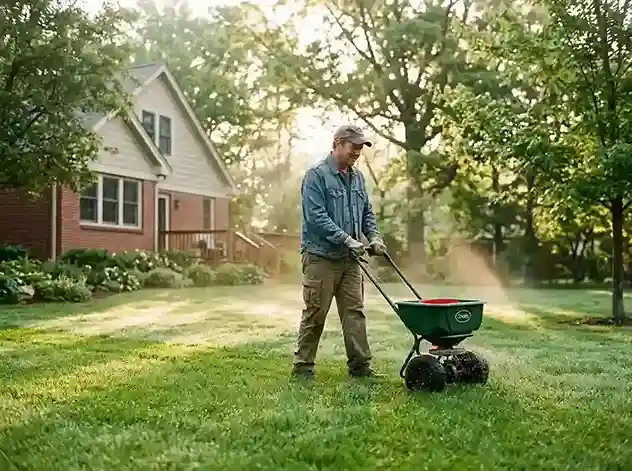
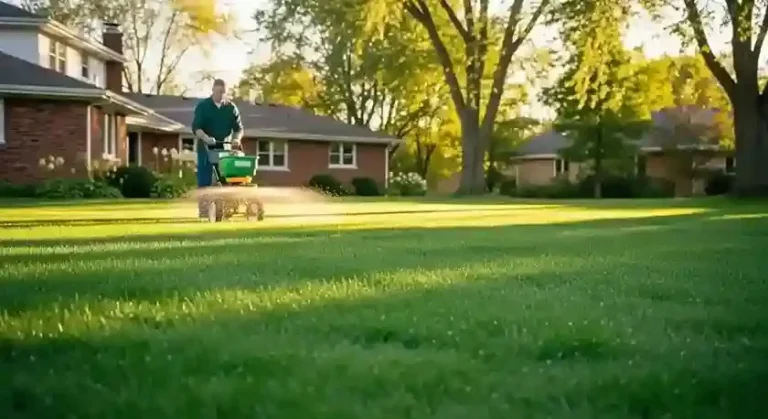
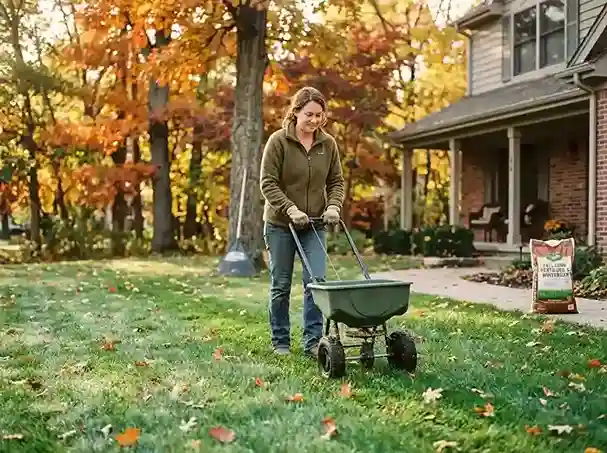
Using a rotary or drop spreader, apply a high-quality Wisconsin cool-season grass seed blend at the rate recommended on the package — typically 4 to 8 pounds per 1,000 square feet for overseeding. Seed falls into the aeration holes and across the soil surface. Do not rake in the seed; foot traffic will work it into holes naturally.
-
5Apply Starter Fertilizer
A phosphorus-rich starter fertilizer applied immediately after overseeding supports strong root development in new seedlings. If your soil test shows adequate phosphorus, use a balanced formula. The open aeration channels allow fertilizer to reach the root zone more efficiently than on un-aerated soil.
-
6Water Consistently
Keep the seed bed moist — lightly watered two to three times per day — until germination is visible (7 to 14 days for most cool-season varieties). Then transition to deeper, less frequent watering to encourage root depth. A minimum of 1 inch of water per week from rainfall or irrigation is needed throughout the establishment period.
-
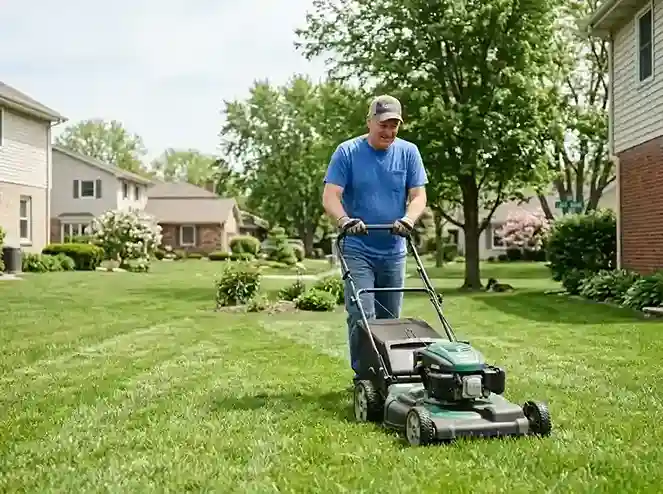
7First Post-Seeding Mow at 3.5 inches
Wait until new seedlings reach at least 3.5 to 4 inches before mowing for the first time. Mowing too early uproots fragile seedlings. Set the mower blade high and avoid heavy foot traffic on new germination areas for at least 4 to 6 weeks.
Comprehensive Lawn Care Services in Kenosha, WI
Aeration and overseeding are cornerstones of a healthy Wisconsin lawn, but a truly outstanding yard requires a full-season approach. At Lawn Care Kenosha, we offer integrated lawn care and maintenance programs tailored to the specific growing conditions, soil types, and climate patterns of the Kenosha-Racine area.
Our residential lawn care services include everything from scheduled mowing and fertilization programs to targeted weed and pest control, seasonal cleanups, and annual aeration-overseeding packages. For businesses, associations, and property managers, our commercial lawn care team handles high-visibility properties with the consistency and professionalism your image demands. We also offer commercial lawn care contracts that lock in priority scheduling and consistent pricing throughout the season.
Beyond the lawn itself, our Kenosha Landscaping Services team designs and installs landscape features that complement and enhance your turf investment. And for lasting curb appeal, our Trusted Hardscapers team crafts patios, walkways, retaining walls, and outdoor living spaces that elevate your entire property. From Hardscaping to lawn renovation, we handle the full picture.
Frequently Asked Questions — Lawn Aeration vs Overseeding
Should I aerate or overseed first?
Always aerate first, then overseed immediately after. The holes created by core aeration provide perfect pockets for grass seed to make direct soil contact, dramatically improving germination rates. Overseeding before aeration means seed ends up on the surface or in thatch, where germination is unreliable.
What is the best time to aerate and overseed in Wisconsin?
Late August through mid-September is the optimal window for Kenosha and greater Wisconsin. Cool nights and warm soil encourage fast germination and strong root development before winter. A secondary spring window (May 1–June 15) is available but faces greater weed competition.
Should I use a spike aerator or plug aerator before overseeding?
A plug (core) aerator is strongly preferred before overseeding, especially on Kenosha’s clay-rich soils. It physically removes soil cores, creating open channels for seed-to-soil contact. Spike aerators only push soil aside and can actually worsen compaction over time — they are not recommended as a primary pre-overseeding treatment.
Is dethatching necessary before overseeding in Wisconsin?
If your thatch layer exceeds half an inch, dethatching before aerating and overseeding improves seed-to-soil contact significantly. For lawns with moderate thatch (under half an inch), core aeration alone is typically sufficient to penetrate the thatch layer and allow seeds to reach mineral soil.
How often should I aerate my Kenosha lawn?
Most Kenosha-area lawns benefit from annual core aeration, especially those on clay-heavy soils common in the region. High-traffic lawns or those with visible compaction — water pooling, hard soil — may need aeration twice a year. Sandy soils may only need aeration every two to three years.
Can I overseed without aerating?
Yes, overseeding without aerating is possible and produces results on lawns with good soil quality and minimal thatch. However, on compacted Wisconsin clay soils, germination rates will be significantly lower because seed cannot make reliable contact with mineral soil. For best results, aerate before overseeding.
What grass seed is best for overseeding in Kenosha, Wisconsin?
Cool-season grass blends work best in the Kenosha area. Kentucky bluegrass provides a dense, attractive turf but germinates slowly (14–28 days). Tall fescue is drought-tolerant and establishes faster. Fine fescue blends perform well in shaded areas. A quality blend of Kentucky bluegrass, perennial ryegrass, and fine fescue is an excellent all-around choice for Kenosha-area lawns.
Do I need to water after aeration and overseeding?
Yes — consistent moisture is essential for germination. Water lightly two to three times per day for the first two weeks after overseeding to keep the seed bed consistently moist. Once seedlings are established (typically 14–21 days), reduce watering frequency but increase the depth to encourage deep root growth. A minimum of 1 inch per week from rain or irrigation is the target throughout the establishment period.
The lawn aeration vs overseeding debate has a clear answer for most Wisconsin homeowners: you don’t have to choose. These two treatments work in concert — aeration opens the soil, overseeding fills it with life. When timed correctly, executed with the right equipment (core aerator, not spike shoes), and followed up with consistent watering and fertilization, a fall aeration-overseeding program is the single highest-return investment you can make in your Kenosha lawn.
Whether you’re tackling it yourself or looking for a professional residential lawn care team to handle the whole process, the science is on your side. September in Kenosha is prime time. Make it count.