Common Lawn Weeds in United States
Your complete visual identification and control guide to the most common weeds found in lawns — from Kenosha, Wisconsin to Ohio, Florida, and every state in between.
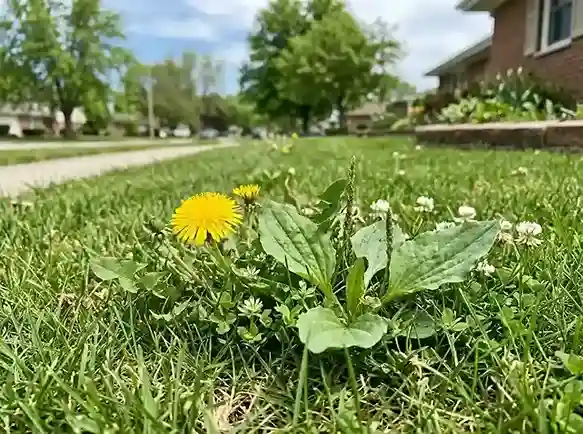
Common lawn weeds identified in Kenosha County, Wisconsin and across the United States
What Are Common Lawn Weeds?
Common lawn weeds are uninvited plants that invade your turfgrass and compete aggressively for sunlight, water, soil nutrients, and space. Left unchecked, even a minor weed problem can transform a healthy, lush lawn into a patchy, struggling mess within a single growing season. Whether you are a homeowner in Kenosha, Wisconsin, a property manager in Ohio, or a gardener in Florida, identifying common weeds found in lawns is the critical first step toward effective control.
Weeds thrive wherever turfgrass is weakened — in areas of compacted soil, poor drainage, inconsistent mowing, or nutrient deficiency. Understanding why weeds appear in your lawn is just as important as knowing how to remove them. A dense, properly fertilized, and well-watered lawn is the single best defense against weed invasion.
This guide covers pictures of common lawn weeds, their scientific names, identifying characteristics, geographic range, and the most effective control strategies — both cultural and chemical. Whether you’re battling dandelions in your front yard or trying to identify that mystery plant spreading across your backyard, this comprehensive resource has you covered from coast to coast.
🔑 Why Weed Identification Matters
- Different weeds require different herbicide types — misidentifying a weed can waste time and money
- Annual weeds are best treated with pre-emergent herbicides; perennial weeds need post-emergent treatment
- Some weeds indicate underlying lawn problems like compacted soil or poor drainage
- A weed’s growth habit (broadleaf, grassy, or sedge) determines which products are safe to use near your turf
Three Types of Weeds Found in Lawns
Before diving into individual weed profiles, it’s essential to understand the three primary categories of common weeds in lawns. Every weed you encounter will fall into one of these groups, and knowing the category guides your entire control strategy.
Broadleaf Weeds
These weeds have wide, flat leaves and often produce showy flowers. Examples include dandelions, clover, plantain, and chickweed. Selective broadleaf herbicides (like those containing 2,4-D) target these plants without harming your grass.
Grassy Weeds
These weeds closely resemble turfgrass but grow in an undesirable manner — in clumps, faster, or with a different texture. Crabgrass, goosegrass, and foxtail are prime examples. They require grass-selective or non-selective herbicides.
Sedges
Sedges look like grass but have distinctive triangular stems (“sedges have edges”) and can be felt by rolling the stem between your fingers. Yellow nutsedge is the most common example. They require specialized sedge-specific herbicides.
15 Most Common Lawn Weeds (With Pictures)
The following profiles cover the most common weeds found in lawns across the United States. Each entry includes identification tips, growth habits, geographic range, and control recommendations so you can take action quickly and effectively.
Dandelion
Perhaps the most recognizable of all common lawn weeds, dandelions feature bright yellow flowers and serrated, deeply notched leaves that form a flat rosette close to the ground. Their fluffy seed heads scatter thousands of seeds by wind. They develop a deep taproot that makes hand-pulling difficult without a specialized tool.
Identification: Bright yellow flowers that mature into white spherical seed heads; leaves have serrated, backward-pointing lobes; milky sap when stem is broken.
Control: Hand-dig with a dandelion fork to remove the entire taproot. Apply broadleaf post-emergent herbicide containing 2,4-D in fall when dandelions actively transport nutrients to roots.
Crabgrass
Crabgrass is the most notorious summer annual grassy weed found in lawns across the United States. It thrives in thin turf, hot pavement edges, and overwatered areas. It spreads aggressively by seed — a single plant can produce over 150,000 seeds per season. It grows low and wide with finger-like seed heads radiating from a central point.
Identification: Coarse-textured grass growing in spreading clumps; leaf blades wider than lawn grass; characteristic finger-like seed heads in mid to late summer.
Control: Apply a crabgrass pre-emergent herbicide in early spring before soil temperatures reach 55°F. Post-emergent products work on young plants; established crabgrass is harder to kill.
White Clover
White clover is one of the most common weeds in lawns nationwide, particularly in areas with nutrient-poor soil. As a nitrogen-fixing legume, it can actually enrich the soil — which is why some homeowners welcome it. However, it spreads by runners and seed, forming dense patches that crowd out turfgrass.
Identification: Distinctive three-lobed (shamrock) leaves, often with a V-shaped white chevron marking; small white globe-shaped flowers on tall stems in spring and summer.
Control: Improve lawn fertility with a proper nitrogen fertilization program — a well-fed lawn will naturally crowd out clover. For chemical control, use selective broadleaf herbicides containing MCPP or dicamba.
Yellow Nutsedge
Yellow nutsedge is frequently misidentified as a grass, but it’s a sedge — and it’s one of the most persistent common weeds found in lawns. It thrives in moist, poorly drained areas and grows faster than most turfgrasses, especially in summer. Underground nutlets (tubers) make it nearly impossible to control by hand-pulling alone.
Identification: Bright, lime-green leaves that grow faster than surrounding grass; triangular stem (roll between fingers to feel edges); yellowish-brown seed heads appear in mid-summer.
Control: Improve drainage to eliminate the moist conditions nutsedge prefers. Apply sedge-specific herbicides like halosulfuron or sulfentrazone. Multiple treatments in the same season are usually needed.
Broadleaf Plantain
Broadleaf plantain is one of the most common weeds in a lawn with compacted, moist, nutrient-rich soil. Its flat, oval leaves form a rosette that presses down and smothers surrounding grass. It tolerates heavy foot traffic better than most plants, making it a common weed in paths and high-traffic lawn areas.
Identification: Oval, smooth or slightly hairy leaves with prominent parallel veins; leaves form a basal rosette; tall narrow spikes of tiny greenish flowers appear in summer.
Control: Aerate compacted soil to remove the conditions plantain loves. Hand-pull or dig individual plants, removing the taproot. Apply broadleaf herbicides containing 2,4-D or triclopyr in fall.
Common Chickweed
Common chickweed is a cool-season annual that germinates in fall and thrives throughout winter and early spring, dying off when summer heat arrives. It forms dense, low-growing mats that can smother turfgrass before the lawn recovers from winter dormancy. It favors moist, shaded areas with fertile soil.
Identification: Small, bright green oval leaves; tiny white star-shaped flowers with deeply notched petals; stems have a single line of fine hairs; mat-forming growth habit.
Control: Apply pre-emergent herbicide in early fall before germination. Post-emergent broadleaf herbicides are effective on young plants. Improve drainage and reduce shade where possible.
Prostrate Spurge
Prostrate spurge is a summer annual that forms dense, flat mats radiating from a central taproot. It favors thin, weak turf and is commonly found in cracks in driveways and sidewalks as well as areas where lawn coverage is poor. When the stem is broken, it exudes a distinctive milky white sap that can irritate skin.
Identification: Small, dark green oval leaves often with a reddish spot in the center; reddish hairy stems; forms flat mat close to the ground; white milky sap when broken.
Control: Hand-pull before seeds set. Apply pre-emergent herbicides in spring. Improve turf density through overseeding to eliminate bare spots where spurge takes hold.
Goosegrass
Goosegrass is a summer annual grassy weed that is often confused with crabgrass but is more challenging to control. It has a flattened white stem base — its most distinctive feature — and its seed heads look like a zipper pattern on long spikes. It thrives in compacted, heavily trafficked soils where other weeds struggle.
Identification: Distinctive silvery-white or light green flattened stem base; dark green, flat leaf blades; zipper-pattern seed heads on 2–7 finger-like spikes.
Control: Core aeration to address compaction is essential. Pre-emergent herbicides applied slightly later than for crabgrass (soil temps of 60°F+). Post-emergent grass-selective herbicides for established plants.
Foxtail
Yellow and green foxtail are common grassy weeds in lawns across the United States. Their distinctive bristly seed heads — resembling a fox’s tail — can travel far via shoes, animals, and garden tools. The seed heads of foxtail can also be hazardous to pets, as the spiky seeds can become lodged in skin or cause digestive issues if ingested.
Identification: Coarse-textured grass blades with a hairy upper surface; distinctive fuzzy, bristle-covered cylindrical seed heads that appear in late summer; clump-forming growth.
Control: Pre-emergent herbicides applied in spring before soil warms. Hand-pull small infestations before seed heads form. Maintaining a healthy, dense lawn prevents establishment.
Ground Ivy (Creeping Charlie)
Ground ivy — commonly called Creeping Charlie — is a persistent perennial broadleaf weed that spreads through both seeds and creeping stems (stolons). It loves shaded, moist areas and spreads rapidly along the ground. When mowed or crushed, it releases a distinctive mint-like aroma. It’s one of the most common weeds in a lawn in the Midwest, including Wisconsin and Ohio.
Identification: Round to kidney-shaped scallop-edged leaves with prominent veins; small purple to blue funnel-shaped flowers in spring; square stems (a mint family characteristic); strong minty scent when crushed.
Control: Triclopyr-based broadleaf herbicides are most effective. Apply in fall when the plant is actively moving nutrients to its roots. Multiple applications in successive years may be necessary.
Oxalis (Wood Sorrel)
Oxalis or yellow wood sorrel is a common weed found in lawns throughout the United States. It’s often mistaken for clover because of its three-lobed leaves, but oxalis has heart-shaped leaflets and small, bright yellow flowers. It spreads aggressively via seed pods that explosively eject seeds when touched.
Identification: Three heart-shaped leaflets on long stalks; small bright yellow five-petal flowers; seed pods are elongated capsules that pop open at maturity; mildly sour taste (oxalic acid).
Control: Hand-pull before seed pods develop. Apply broadleaf post-emergent herbicides containing triclopyr or 2,4-D. Repeated treatments are often necessary because seeds remain viable in soil for years.
Henbit
Henbit is a cool-season winter annual that appears in early spring, blooms quickly, and dies back in summer heat. It is one of the most visible common weeds in lawns each spring, painting large areas purple-pink with its tubular flowers. It prefers moist soils and is common in thin or dormant turf.
Identification: Rounded leaves with scalloped edges; upper leaves clasp the stem without a stalk; distinctive pink to purple tubular flowers in spring; square stems (mint family).
Control: Apply pre-emergent herbicide in early fall before winter germination. Post-emergent broadleaf herbicides (2,4-D) work on actively growing plants. Mowing before seed set helps reduce spread.
Annual Bluegrass (Poa annua)
Annual bluegrass is a cool-season grassy weed that germinates in fall and thrives in spring before dying out in summer heat. It is visually distinct in spring when its greenish-white seed heads rise above the surrounding lawn. It thrives in compacted, overwatered, or poorly drained soils and can produce viable seeds even when mowed very short.
Identification: Bright green, boat-tipped grass blades; pale green to whitish seed heads visible in spring; grows in compact clumps; lighter green color than most lawn grasses.
Control: Apply pre-emergent herbicide in late summer or early fall. Bag mower clippings in spring to prevent seed spread. Core aeration and improved drainage reduce infestation pressure.
Black Medic
Black medic is a low-growing annual or short-lived perennial legume commonly found in dry, infertile, low-nitrogen lawns. Like clover, it can fix atmospheric nitrogen, allowing it to thrive where turfgrass is weak. It spreads by seed and forms spreading colonies in thin turf throughout the United States.
Identification: Small three-lobed clover-like leaves with a tiny point at the tip; small bright yellow flower clusters; distinctive black kidney-shaped seed pods; prostrate, spreading growth.
Control: Improve soil fertility with nitrogen fertilization to encourage dense turfgrass that outcompetes this weed. Broadleaf herbicides applied in late spring to early summer are effective.
Common Purslane
Purslane is a drought-tolerant summer annual that invades thin lawns, garden beds, and sidewalk cracks. It is highly succulent — its thick leaves and stems store water — which makes it difficult to kill by pulling alone, as broken plant pieces can re-root in moist soil. Despite being edible and nutritious, it’s a persistent lawn pest in warmer climates.
Identification: Thick, fleshy paddle-shaped leaves that are smooth and waxy; reddish-pink succulent stems; prostrate mat-forming growth; tiny yellow flowers on sunny mornings.
Control: Hand-pull and remove all plant material (do not leave on soil — it can re-root). Apply pre-emergent herbicides in spring. Post-emergent broadleaf herbicides on young plants before they set seed.
Common Lawn Weeds in Ohio
Ohio’s diverse climate — featuring hot, humid summers, cold winters, and ample rainfall — creates ideal conditions for both cool-season and warm-season common weeds. Ohio lawns are predominantly planted with cool-season grasses like Kentucky bluegrass, tall fescue, and perennial ryegrass, which means weed management strategies must be timed carefully around the cool and warm growing seasons.
🌿 Top Cool-Season Weeds in Ohio
- Dandelion — most widespread Ohio lawn weed
- Ground Ivy (Creeping Charlie) — shaded areas
- Common Chickweed — fall/winter/spring
- Annual Bluegrass (Poa annua) — overwatered lawns
- Henbit — early spring purple carpets
- Broadleaf Plantain — compacted soils
☀️ Top Warm-Season Weeds in Ohio
- Crabgrass — summer annual, most complained about
- Foxtail — late summer seed heads
- Yellow Nutsedge — wet areas, June–September
- Spurge — thin turf, sunny spots
- Oxalis / Wood Sorrel — gardens and lawns
- Purslane — garden beds and thin turf
In Ohio, timing is everything. Crabgrass pre-emergent herbicides should be applied when forsythia blooms — typically late March to mid-April — as this signals soil temperatures approaching 55°F. Broadleaf weed treatments are most effective in early fall (September to October), when perennial weeds like dandelion and ground ivy are actively moving energy to their root systems and absorb herbicides most readily.
🌡️ Ohio Weed Season Calendar
- February–April: Chickweed, henbit, hairy bittercress active and flowering
- April–May: Apply crabgrass pre-emergent; treat broadleaf weeds while actively growing
- June–August: Crabgrass, foxtail, nutsedge peak growth; spot-treat aggressively
- September–October: Best window for broadleaf herbicides (dandelion, ground ivy, clover)
- November–December: Overseed thin turf to crowd out next year’s weeds
Common Florida Lawn Weeds
Florida presents one of the most challenging weed environments in the entire United States. With year-round growing seasons, sandy soils that drain quickly, high humidity, and frequent rainfall, common Florida lawn weeds have multiple opportunities each year to establish and spread. Many Florida weeds reproduce through both seeds and underground root systems (rhizomes), making complete control exceptionally challenging.
🌴 Most Persistent Florida Lawn Weeds
- Crabgrass — #1 summer annual statewide
- Dollarweed (Pennywort) — wet, poorly drained areas
- Spurge — thrives in drought and heat
- Florida Pusley — white-flowered summer annual
- Oxalis (Yellow Woodsorrel) — spreads by rhizomes
- Dallisgrass — coarse perennial grassy weed
💧 Florida Sedges & Specialty Weeds
- Yellow Nutsedge — wet areas, year-round
- Globe Sedge — sandy soils, coastal areas
- Bermudagrass invasion in St. Augustine turf
- Buttonweed — southeastern U.S. specialty weed
- Lawn Burweed — winter annual, barefoot hazard
- Tropical Signalgrass — summer grassy weed
Dollarweed — also known as pennywort — is one of the signature common Florida lawn weeds. Named for its coin-shaped leaves that can grow as large as a silver dollar, dollarweed thrives in areas of poor drainage and excessive soil moisture. Improving drainage and adjusting irrigation schedules is the first step in controlling it, followed by post-emergent broadleaf herbicide applications when it is actively growing.
Florida Pusley is another Florida-specific persistent weed, easily identified by its clusters of tiny white flowers. Because it spreads through both seeds and rhizomes, pre-emergent weed control products applied in early spring are the most effective defense. Deep taproots make physical removal labor-intensive and often ineffective on its own.
Common Weeds in Midwest Lawns (Kenosha & Wisconsin)
In Kenosha County, Wisconsin and across the upper Midwest, lawn weed management is driven by the cool-season grass calendar. Lawns here are primarily Kentucky bluegrass, fine fescue, and perennial ryegrass — all of which can be vulnerable to weed invasion in spring before the grass fully greens up and in the heat of mid-summer when turf stress is highest.
The most common weeds in Kenosha area lawns include dandelions (which explode across every lawn in April and May), ground ivy spreading through shaded yards, crabgrass invading thin edges and driveways, and yellow nutsedge emerging in low spots where water collects. Proper lawn care and maintenance on a consistent schedule is the strongest defense any Kenosha homeowner can have against weed pressure.
🌿 Kenosha County Weed Control Best Practices
- Apply crabgrass pre-emergent in late April when forsythia blooms and soil temps reach 50–55°F
- Mow cool-season grass at 3.5–4 inches — taller grass shades and smothers weed seedlings
- Overseed thin or bare spots every fall to prevent weed establishment next spring
- Treat broadleaf weeds in September and October for maximum herbicide effectiveness
- Core aerate annually to reduce soil compaction — a primary cause of weed pressure
- Avoid overwatering; most lawn weeds in Wisconsin are opportunistic in wet, thin turf
For homeowners who want professional results without the guesswork, partnering with a local Lawn Care Kenosha provider ensures weeds are treated at exactly the right time with the right products. Professional lawn care programs address weed control as part of a comprehensive plan that also includes fertilization, aeration, and overseeding — giving your lawn every advantage against weed invasion throughout the season.
How to Control Common Weeds in Your Lawn
Effective weed control is not a single event — it is a season-long program that combines cultural practices, mechanical removal, and targeted herbicide applications. Understanding how each control method works helps you choose the right strategy for the specific common lawn weeds you’re dealing with.
| Control Method | Best For | Timing | Effectiveness |
|---|---|---|---|
| Pre-Emergent Herbicide | Crabgrass, foxtail, spurge, annual bluegrass | Early spring (or fall for winter annuals) | ⭐⭐⭐⭐⭐ Prevents germination |
| Post-Emergent Broadleaf | Dandelion, clover, plantain, henbit, ground ivy | Fall preferred; spring if actively growing | ⭐⭐⭐⭐ Targets specific weeds |
| Sedge-Specific Herbicide | Yellow nutsedge, globe sedge | When sedge is actively growing (May–Sept) | ⭐⭐⭐⭐ Multiple apps needed |
| Hand Removal / Digging | Isolated dandelions, plantain, young perennials | Any time; best when soil is moist | ⭐⭐⭐ Labor-intensive but safe |
| Core Aeration | Compaction-loving weeds (plantain, goosegrass) | Fall for cool-season; spring for warm-season | ⭐⭐⭐⭐ Addresses root causes |
| Overseeding | All weeds — prevents establishment | Early fall (best) or spring | ⭐⭐⭐⭐⭐ Long-term prevention |
| Fertilization Program | Clover, black medic, nitrogen-loving weeds | Spring and fall feeding cycles | ⭐⭐⭐⭐ Strengthens turf vs. weeds |
Using Herbicides Safely and Effectively
When cultural controls alone are not enough to manage common weeds found in lawns, herbicides become an important tool. Always read and follow label directions completely — the label is the law. Key principles for safe, effective herbicide use include measuring your lawn’s square footage before mixing any product, applying on calm, wind-free days to prevent drift onto desirable plants, avoiding applications before rain events that could wash herbicide off target, and wearing appropriate personal protective equipment including gloves and eye protection.
For residential lawn care, selective herbicides that target specific weed types are almost always preferable to non-selective products like glyphosate, which will kill your lawn grass as well as the weeds. Partner with professional residential lawn care services to ensure the right products are selected, mixed correctly, and applied at the optimal time for your specific weed pressure.
Prevention: Stop Weeds Before They Start
The single most powerful weed control strategy is also the simplest: grow a healthy, dense, vigorous lawn. A thick stand of well-maintained turfgrass shades the soil surface, blocks weed germination, and outcompetes any weed that does manage to establish. Every cultural practice that improves lawn health is simultaneously a weed prevention measure.
✅ The 7 Pillars of Weed-Free Lawn Prevention
- Mow at the right height: Cool-season grasses at 3.5–4 inches; warm-season grasses at 1.5–2.5 inches. Taller grass shades weed seeds on the soil surface.
- Water deeply and infrequently: Water 1 inch per week in one or two sessions. Frequent shallow watering encourages weeds over deep-rooted turfgrass.
- Fertilize on schedule: A well-fed lawn outcompetes weeds naturally. Soil-test before fertilizing to address specific deficiencies.
- Overseed bare or thin areas every fall: Bare soil is an open invitation for weed seeds. Filling gaps with desirable grass removes that opportunity.
- Core aerate annually: Reduces compaction that allows weeds like plantain and goosegrass to thrive while grass struggles.
- Keep mower blades sharp: Dull blades shred grass rather than cutting cleanly, stressing the turf and making it more vulnerable to weed invasion.
- Apply pre-emergent on time: Target crabgrass and other summer annuals every spring before soil temperatures reach the germination threshold.
For homeowners who want comprehensive protection, professional residential and commercial lawn care programs typically include pre-emergent weed applications as part of a 5–7 step fertilization and weed control program. These programs time every application precisely to your local climate and turf type, giving you far better results than sporadic DIY treatments.
Businesses and property managers can protect their grounds with commercial lawn care contracts that include regular weed monitoring, seasonal pre-emergent and post-emergent treatments, and guaranteed results. Commercial properties often require a higher standard of weed control than residential lawns, and professional contractors have the equipment, licensing, and expertise to deliver it consistently.
Ready for a Weed-Free Lawn in Kenosha?
Our local lawn care professionals use proven weed identification and control strategies tailored to Kenosha County’s specific climate, soil types, and grass varieties. Get expert help — from seasonal weed treatments to complete lawn renovation.
Frequently Asked Questions About Common Lawn Weeds
What are the most common weeds found in lawns across the United States?
The most widespread common weeds in lawns nationwide include dandelion, crabgrass, white clover, broadleaf plantain, yellow nutsedge, chickweed, ground ivy (Creeping Charlie), oxalis, foxtail, and annual bluegrass (Poa annua). These weeds appear in virtually every climate zone and turf type from Ohio to Florida and everywhere in between.
How do I identify common lawn weeds from pictures?
The best approach to identifying pictures of common lawn weeds is to examine three key features: the leaf shape and arrangement (broadleaf, narrow, or grass-like), the stem cross-section (round, triangular/sedge, or square/mint family), and the growth habit (rosette, mat-forming, upright, or spreading). Apps like iNaturalist can also help with photo identification. Our weed profiles above include the most critical visual identifiers for each species.
What are the most common lawn weeds in Ohio?
Common lawn weeds in Ohio include dandelion, ground ivy (Creeping Charlie), crabgrass, annual bluegrass, chickweed, henbit, yellow nutsedge, broadleaf plantain, and foxtail. Ohio’s climate supports both cool-season weeds (active in spring and fall) and warm-season weeds (active in summer), so a year-round management approach is needed.
What are the most common Florida lawn weeds?
Common Florida lawn weeds include crabgrass, dollarweed (pennywort), spurge, Florida pusley, yellow nutsedge, oxalis, dallisgrass, and buttonweed. Florida’s warm, humid climate and year-round growing season make weed control particularly challenging, as many weeds can establish and spread in every month of the year.
When should I apply pre-emergent weed control?
For crabgrass and summer annual weeds, apply pre-emergent herbicide in early spring when soil temperatures consistently reach 50–55°F (approximately when forsythia or redbud trees bloom in your area). For winter annual weeds like chickweed and annual bluegrass, apply in late summer to early fall (August–September) before fall germination begins.
Can I control common lawn weeds without chemicals?
Yes — cultural controls are highly effective for weed prevention and management. Mowing at the correct height (3.5–4 inches for cool-season grasses), overseeding bare areas every fall, core aerating annually, and maintaining a consistent fertilization program can dramatically reduce weed pressure without any chemical inputs. For existing infestations, hand-pulling with proper technique is effective for many broadleaf perennials. Chemical control is typically reserved for widespread infestations where cultural methods alone cannot achieve the desired results.
Does Lawn Care Kenosha provide weed control services?
Yes. Lawn Care Kenosha provides comprehensive weed control as part of our residential and commercial lawn care programs. Our programs include seasonal pre-emergent and post-emergent applications timed to Kenosha County’s local climate, ensuring maximum effectiveness against the specific common weeds in lawns throughout Wisconsin and the greater Kenosha area.
Take Action Against Common Lawn Weeds Today
Common lawn weeds in the United States are opportunistic plants that seize every advantage your lawn gives them — thin turf, compacted soil, inconsistent watering, and poor fertility. The good news is that each of these vulnerabilities is within your control. By investing in a consistent, science-based lawn care program, you systematically remove every opportunity weeds need to establish and thrive.
Whether you’re a homeowner in Kenosha battling dandelions and ground ivy, a property manager in Ohio dealing with crabgrass pressure, or a Florida resident frustrated by year-round dollarweed and nutsedge, the principles are the same: identify the weed, understand its life cycle, and choose the right control method at the right time.
For those who want professional results, expert help is just a call away. Our team at Lawn Care Kenosha specializes in comprehensive weed identification and control programs designed specifically for Kenosha County’s climate and soil conditions. From pre-emergent applications in spring to fall broadleaf treatments and complete lawn renovation services, we provide everything your lawn needs to stay thick, green, and weed-free throughout the season. Explore our full range of residential lawn care services, commercial lawn care solutions, and Kenosha landscaping services today, and take the first step toward the weed-free lawn you deserve. If you’re also interested in enhancing your outdoor space beyond the turf, our trusted hardscapers deliver beautiful, lasting hardscaping solutions throughout Kenosha County.