Common Lawn Problems Near Lake Michigan | Kenosha WI Lawn Care Guide
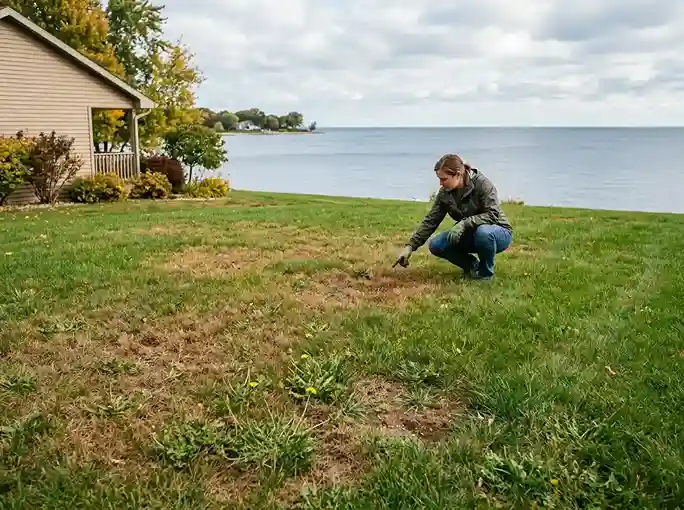
Common Lawn Problems Near Lake Michigan
Identifying & fixing common lawn problems, mower problems, and local Wisconsin turf issues — with pictures and expert solutions
The Lake Michigan Effect on Your Kenosha Lawn
Homeowners in Kenosha and the communities hugging the western shore of Lake Michigan — Pleasant Prairie, Somers, Racine, and Winthrop Harbor — face a unique set of common lawn problems that are intensified by the lake’s microclimate. Understanding this is the first step toward solving them effectively.
Lake Michigan acts as a massive thermal buffer. It keeps springs cooler and wetter longer than inland Wisconsin, delays the soil warming that cool-season grasses need to break dormancy, extends humid conditions that fuel fungal disease, and creates lake-effect moisture events that keep turf damp for longer periods. The result: lawns here are uniquely susceptible to snow mold, necrotic ring spot, dollar spot, and European chafer grub activity — all problems identified by UW Extension as particularly prevalent along the Lake Michigan corridor.
Additionally, Kenosha’s soils are predominantly heavy clay-loam — dense, slow-draining soils that compound problems like thatch buildup, root compaction, and waterlogged areas that create ideal conditions for turf disease and weed pressure. Nearly every common lawn problem for homeowners in this region can be traced back to how these two factors — the lake microclimate and clay soils — interact with your turf.
Kenosha Microclimate Fact: Spring soil temperatures near Lake Michigan can run 5–8°F cooler than inland communities at the same latitude. This delays the optimal overseeding window, reduces fertilizer uptake in early spring, and extends the window for snow mold activity well into April in some years.
Common Lawn Problems — Pictures & Identification Guide
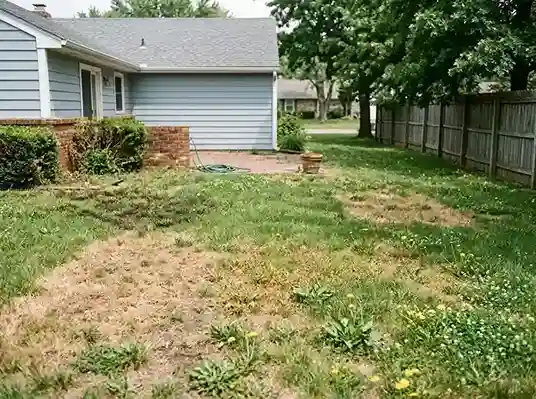
Visual identification is the critical first step in solving any lawn problem. Treating a fungal disease with the wrong product — or confusing drought stress for grub damage — wastes time and money. The images below, combined with the identification table, will help you diagnose common lawn problems with pictures before calling a professional or purchasing treatment products.
Common Lawn Diseases in Southeastern Wisconsin
Lawn diseases are among the most misdiagnosed and undertreated problems in the Kenosha area. The Lake Michigan humidity, combined with cool-season turf and clay soils, creates textbook conditions for fungal lawn disease. Here are the most common problems with lawns in our region from a disease standpoint:
Snow Mold (Pink & Gray)
Snow mold is the most common lawn disease in Kenosha Wisconsin lawns and the first problem most homeowners notice each spring. It appears as circular matted patches of bleached or pinkish-gray turf after snow melts. Pink snow mold (Microdochium patch) is active between 32–60°F and is the more damaging of the two species — it can infect grass without snow cover. Gray snow mold (Typhula blight) requires snow cover to develop but can cause extensive damage in heavy snow years.
Prevention: Mow to 2.5 inches going into winter, apply winterizer fertilizer (not excessive nitrogen), and avoid leaving leaves on the lawn. For high-risk lawns, a preventive fungicide (iprodione or chlorothalonil) applied in late fall significantly reduces incidence.
Fix: Lightly rake matted areas in spring to improve airflow. Most mild cases recover naturally with warming temperatures. Reseed if grass crowns are completely killed (pinch the grass — if the crown is soft and mushy, it’s dead).
Necrotic Ring Spot
Necrotic ring spot is a serious root fungus common in Kentucky Bluegrass lawns throughout Kenosha County. It creates distinctive “frog-eye” patterns — dead rings of 3–12 inch diameter with live green grass in the center. The fungus attacks roots and crowns, and is most active in cool, wet spring conditions — exactly what Lake Michigan delivers.
Fix: Core aerate to reduce compaction and improve drainage. Avoid overwatering and evening irrigation. Fungicide (thiophanate-methyl or azoxystrobin) applied in early spring and fall provides control. Overseed with resistant fescue varieties to gradually replace susceptible bluegrass in affected areas.
Dollar Spot
Dollar spot appears in summer as scattered straw-colored spots the size of a silver dollar to a softball. Common in low-nitrogen lawns during humid, dew-heavy nights — which Lake Michigan frequently provides in July and August. White cottony mycelium may be visible on grass blades in early morning.
Fix: Ensure adequate nitrogen fertilization (dollar spot thrives in underfed turf). Improve air circulation by pruning overhanging shrubs. Water in the morning, not evening. Fungicide (chlorothalonil, azoxystrobin) if severe.
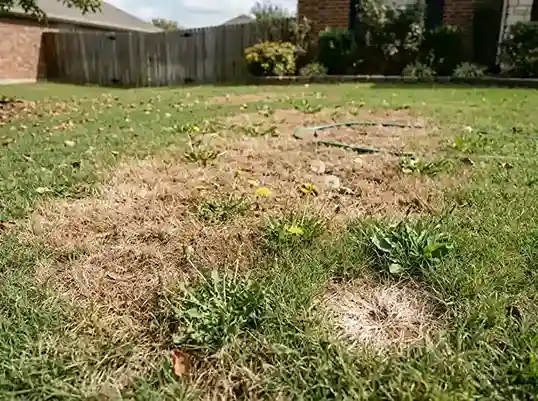
Identification First: Applying a fungicide to grub damage, or a grub control product to a fungal disease, wastes money and delays effective treatment. Always identify the problem correctly before purchasing any product. When in doubt, contact Lawn Care Kenosha’s residential lawn care team for a professional diagnosis.
Common Lawn Weeds for Homeowners in Kenosha, WI
Weeds are opportunists — they colonize thin, stressed, or poorly maintained turf. The most common problems with lawns in SE Wisconsin from a weed perspective fall into two categories: broadleaf perennial weeds and annual grassy weeds.
🌿 Creeping Charlie (Ground Ivy)
The single most common broadleaf weed complaint from Kenosha homeowners. Thrives in shaded, moist areas under trees — which Kenosha’s Lake Michigan proximity amplifies. Spreads rapidly by stolons. Highly resistant to standard 2,4-D products. Fix: Apply Triclopyr-based herbicide in fall for best control.
🌼 Dandelion
Deep taproot makes dandelion virtually impossible to pull effectively. The most visible lawn weed in spring. Fix: Fall broadleaf herbicide (2,4-D) is most effective when the plant is moving nutrients to roots. Spring treatment also works but requires more applications.
🌾 Crabgrass
Annual grassy weed germinating when soil temperatures hit 55°F (typically early May in Kenosha). Forms wide, crab-shaped mats in thin areas. Dies with first frost — but seeds 150,000 per plant for next year. Fix: Pre-emergent herbicide in April; thicken turf through fall overseeding.
☘️ White Clover
Three-leafed broadleaf perennial that fixes nitrogen and actually outcompetes grass in low-fertility lawns. More common in under-fertilized Kenosha lawns. Fix: Improve fertility with proper fertilization; apply broadleaf herbicide with MCPP in fall.
🌱 Wild Violet
Deep-rooted perennial with waxy leaves that repel many herbicides. Common in shaded Kenosha lawns near water features. Fix: Requires triclopyr-based product, multiple fall applications over 2–3 seasons for full control.
🌿 Plantain (Broadleaf & Narrow)
Flat rosette weed with prominent parallel-veined leaves. Thrives in compacted soil along walkways and high-traffic areas. Fix: Core aerate to reduce compaction, then spot-treat with broadleaf herbicide.
Grubs & Insect Lawn Problems Near Lake Michigan
Insect pest pressure is a significant and often overlooked source of common lawn problems for homeowners in Southeastern Wisconsin. UW Extension’s July 2025 Lab Lens specifically noted European chafer and masked chafer activity along Lake Michigan and in Kenosha — confirming these pests as a locally elevated threat.
European Chafer & Japanese Beetle Grubs
White grub larvae are the most destructive insect pest of Wisconsin turf. Adult beetles lay eggs in July–August; larvae hatch and feed on grass roots through fall, with feeding resuming in spring before pupating. Symptoms: Large, irregular brown areas that can be lifted or rolled back like loose carpet — the severed root system no longer holds the turf to the soil. Skunks, raccoons, and crows digging up the lawn overnight are a secondary sign of heavy grub presence.
Fix: Apply preventive grub control (imidacloprid or chlorantranilliprole) in June–early July before eggs hatch. Curative products (trichlorfon or carbaryl) work in August–September if grubs are already present. Core aerate and reseed damaged areas in September after treatment.
Chinch Bugs
Chinch bug damage is often mistaken for drought stress — irregular patches turning yellow then brown during hot, dry weather. Damage typically spreads from sunny, dry areas of the lawn outward. To test: push a coffee can with the bottom removed into the affected edge, fill with water, and watch for tiny (1/5 inch) black-and-white insects floating to the surface.
Lake Michigan Pest Alert: Japanese beetle populations near Lake Michigan can be significantly higher than inland areas, as the lake creates favorable thermal habitat. Monitor your lawn and ornamental plantings from late June through August. Our residential lawn care team at Lawn Care Kenosha offers targeted grub prevention programs calibrated to Kenosha County’s documented chafer and Japanese beetle pressure.
Struggling with Lawn Problems in Kenosha?
Professional diagnosis and treatment for disease, grubs, weeds, and turf issues across Kenosha County. Free estimates available.
Common Lawn Mower Problems and Fixes
Beyond turf issues, common lawn mower problems are a major source of frustration for homeowners — especially at the start of spring when mowers come out of winter storage. Research shows bad gas causes approximately 40% of starting problems, air filter issues account for 25%, and spark plug failures cause about 20% of all lawn mower not-starting complaints. The good news: the vast majority are fixable at home in under an hour.
| Problem | Most Likely Cause | Fix | Cost |
|---|---|---|---|
| Mower won’t start | Stale gas (40%); fouled spark plug (20%); dirty air filter (25%) | Drain old gas, replace spark plug, clean/replace air filter | $5–$15 |
| Starts then stalls | Clogged carburetor from old fuel varnish; blocked fuel cap vent | Clean carburetor with carb cleaner; clear fuel cap vent holes | $8–$20 |
| Runs rough / surges | Dirty carburetor; partially blocked fuel line; dirty air filter | Clean carburetor, replace fuel filter, clean air filter | $5–$25 |
| Black smoke from exhaust | Rich fuel mixture; dirty or clogged air filter choking airflow | Replace air filter; check choke is fully open when running | $8–$15 |
| Uneven cut / scalping | Dull, bent, or unbalanced blade; incorrect cutting height | Sharpen and balance blade; raise deck height | $0–$10 |
| Excessive vibration | Bent or unbalanced blade; debris under deck; loose blade bolt | Remove debris; inspect blade; tighten blade bolt to spec | $0–$15 |
| Self-propel not engaging | Worn drive cable; worn drive belt or wheel gears | Inspect and replace drive cable or drive belt | $15–$40 |
| Oil leaking | Overfilled oil; loose drain plug; cracked dipstick gasket | Check oil level (never overfill); tighten drain plug; replace gasket | $2–$12 |
| Pull cord won’t retract | Broken recoil spring; debris in recoil assembly | Replace recoil starter assembly (entire unit is typically cheapest) | $20–$45 |
Common Problems: Lawn Mower Not Starting — Step-by-Step
The single most common lawn mower problem complaint is a mower that won’t start after winter storage. Follow this diagnostic sequence before calling a repair shop:
Pro Tip: A complete spring tune-up kit — spark plug, air filter, fuel filter, and oil — costs $15–$25 at any hardware store and takes 30 minutes to install. Performing this each spring before first use prevents the majority of common lawn mower problems and fixes them before they become issues.
Brand-Specific Lawn Mower Common Problems
While most lawn mower problems share common causes, specific brands have known recurring issues worth understanding. Here’s a summary of common problems with lawn mowers by brand:
Toro Lawn Mower Common Problems
- Recycler deck clogging — in wet or heavy grass; mow dry, never cut more than ⅓
- Personal Pace cable wear — self-propel stops engaging; replace drive cable (~$18)
- Blade brake clutch cable fraying — blade won’t engage; inspect cable length and condition
- Oil leaking at dipstick tube — common on older Recycler models; replace gasket
- Engine issues: Toro uses Briggs and Honda engines — see those sections for specific engine faults
Honda Lawn Mower Common Problems
- GCV160/GCV190 carburetor gumming — most common Honda problem; ethanol damage; clean or replace carb (model 16100-Z8B-901)
- HRR/HRS deck corrosion — Honda’s steel decks rust if not cleaned; rinse underside after each mow
- Variable speed (Hydrostatic) models — hydrostatic fluid low or worn; check fluid level before servicing
- Won’t start after storage — Honda GCV carbs are particularly susceptible to varnish from ethanol fuel; always drain before storage
Briggs & Stratton Common Problems
- Carburetor gumming — most common B&S complaint; replacement carb 799866 fits most models
- Governor surging — engine hunts/surges at idle; governor spring worn or linkage misadjusted
- Oil consumption on older engines — worn piston rings or valve seals; may need rebuild
- Head gasket failure — caused by running hot or low oil; white smoke from exhaust is the tell
- Plastic fuel tank degradation — cracking on Quantum series engines; replace tank if leaking
Ryobi Lawn Mower Common Problems
- 40V battery platform compatibility — older and newer 40V batteries may not be cross-compatible; verify generation
- Battery not charging — clean terminals; check charger indicator; replace battery pack after 3–5 years
- Blade engagement motor failure — on electric Ryobi models; motor may burn if deck is chronically clogged
- Deck clogging in wet grass — electric mowers have less torque; always mow dry and keep deck clean
- Safety key/switch issues — Ryobi requires key insert + bail engagement; check key is fully seated
Common Problems with Robotic Lawn Mowers
Robot lawn mowers are increasingly popular among Kenosha homeowners seeking a hands-off lawn care and maintenance solution. However, common problems with robotic lawn mowers — particularly when operating in Wisconsin’s variable conditions — can be frustrating without the right troubleshooting knowledge.
| Problem | Cause | Fix |
|---|---|---|
| Boundary wire break | Edging tools, aeration, or ground movement cutting the wire | Use a wire tester kit; locate break and splice with waterproof wire connectors |
| Robot gets stuck | Steep slopes (>35%), wet grass reducing traction, narrow passages | Adjust guide wires; schedule mowing when grass is dry; remap boundary for tight areas |
| Charging dock failure | Dirty or corroded charging contacts; dock not level | Clean contacts with dry cloth; ensure dock is on firm level ground; check power supply |
| Error codes / sensors | Debris on lift sensors or tilt sensors; wet grass clogging blade housing | Clean all sensors; check firmware update; clear blade housing of debris |
| Uneven coverage / missed areas | Poor guide wire placement; boundary too complex for robot’s map | Add guide wires to problem areas; simplify boundary layout |
| Short battery run time | Lithium battery degradation after 3–5 years; tall grass draws more current | Replace battery pack; mow more frequently to keep grass shorter |
| Poor cut quality in Wisconsin spring | Wet, rapidly growing grass exceeds robot blade capacity | Supplement with manual mowing in spring growth surge; reduce mowing interval |
Wisconsin-Specific Robot Mower Challenge: Spring in Kenosha brings rapid grass growth and frequent rain events — robotic mowers struggle to keep pace with Wisconsin’s spring flush. Most users supplement with one or two manual mows in April–May. Additionally, core aeration will cut your boundary wire — always mark wire location before aerating.
Common Problems with Electric Lawn Mowers and Fixes
Electric mowers — both corded and battery-powered — are growing in popularity. While they eliminate carburetor and fuel problems, most common problems with electric lawn mowers center around battery management, safety switches, and motor/deck maintenance.
🔋 Battery Won’t Charge
Clean charging contacts with a dry cloth. Check that the charger indicator shows charging (not fault). If battery is over 3 years old or run time has dropped below 50% of original, replace the battery pack. Store batteries indoors above 40°F over winter.
🔌 Won’t Start (Full Charge)
Most common cause: faulty safety switch (blade bail or handlebar switch). Test by pressing each switch firmly. If one is stuck or broken, test with a multimeter and replace the faulty switch — a $5–$15 part on most models.
⚡ Power Loss Mid-Mow
Battery discharges faster in tall or wet grass. Motor thermal protection may also trigger shutdown if deck is clogged. Ensure full charge before mowing; clean deck underside after each session; avoid tall wet grass.
🌡️ Motor Overheating
Clogged deck restricts airflow around the motor. Mowing wet grass or continuously without breaks in heavy turf. Clean the deck after every 2–3 uses. Allow the motor to cool between mowing large areas.
Common Problems with Lawn Aerators and Fixes
Lawn aeration is one of the most impactful services for Kenosha’s compacted clay soils. But rental aerators and consumer-grade machines come with their own set of frequent issues:
- Tines not penetrating: Soil is too dry — aerators need moist (not saturated) soil to pull clean plugs. Water the lawn 24 hours before aerating, or aerate the day after rain.
- Machine too heavy to maneuver: Commercial aerators can weigh 250–400 lbs — engage the drive before releasing the handlebars and always use the deadman clutch when turning. On slopes, aerate across the grade, not up and down.
- Tines breaking off: Hitting buried rocks, sprinkler heads, or compacted gravel fill. Mark all hardscape edges, sprinkler heads, and utility lines with flags before aerating.
- Poor plug formation: Tines are worn or incorrectly sized for the machine — check tine condition before starting and replace worn tines.
- Machine won’t drive forward: Drive belt worn or broken — common on older rental units; notify the rental company or select a different machine.
Our professional aeration equipment achieves significantly greater depth and plug density than typical rental machines, making a meaningful difference in results on Kenosha’s heavy clay soils. Contact our residential lawn care services team to schedule fall aeration.
Common Lawn Patch Problems and Solutions
Bare and thin patches are among the most visible common lawn problems for homeowners — and the most commonly misdiagnosed. Before reaching for grass seed, you need to identify why the patch occurred. Reseeding over an untreated grub problem or active fungal disease will fail every time.
| Patch Type | Identify It | Treatment | Reseed Timing |
|---|---|---|---|
| Snow mold patch | Circular, matted, gray-pink; appears after snowmelt | Rake gently; most recover without treatment | May if crown dead; Sep ideal |
| Grub damage patch | Turf lifts like carpet; spongy, detached from soil | Curative grub control (Aug–Sep); then reseed | September after treatment |
| Dog urine patch | Round, brown center + bright green ring | Flush with water; gypsum application optional | After flushing; September best |
| Necrotic ring spot | Dead ring, live center; “frog-eye” pattern | Fungicide + aeration + reduce irrigation | September with fescue seed |
| Chemical burn patch | Irregular, uniform dead turf following a pattern | Flush soil with water repeatedly | After 2–3 weeks of flushing |
| Drought/heat stress | Uniform thinning in full-sun areas; grass dormant | Irrigate deeply; core aerate to improve water infiltration | September with starter fertilizer |
Professional Lawn Problem Solutions in Kenosha, WI
Many of the common lawn problems and solutions described in this guide can be handled as DIY projects. But for persistent turf disease, grub pressure, chronic weed problems, or lawns that haven’t responded to multiple DIY treatments, professional diagnosis and treatment delivers dramatically better results — faster, and with fewer wasted products.
At Lawn Care Kenosha, our locally experienced team serves Kenosha, Pleasant Prairie, Somers, Racine, and surrounding SE Wisconsin communities. We bring Wisconsin-specific knowledge of the Lake Michigan microclimate, Kenosha’s clay-loam soils, and the pest and disease pressures unique to this region.
Our services covering common lawn problems include:
- Residential lawn care — diagnosis and treatment of all common Wisconsin lawn problems, including disease, weeds, grubs, and soil issues
- Commercial lawn care — full-service turf management programs for commercial properties, HOAs, and multi-unit residential
- Commercial lawn care contracts — seasonal programs ensuring consistent care without tracking individual tasks
- Residential lawn care services list — browse individual services including aeration, overseeding, weed control, grub treatment, and fertilization
- Commercial and residential lawn care — single-source management for mixed or multi-property clients
- Kenosha landscaping services — bed renovation, lawn edge restoration, seasonal plantings, and landscape cleanup
- Hardscaping and landscape structure from our trusted hardscapers — retaining walls, paver patios, driveway edging, and decorative stone to solve drainage and erosion problems that underlie chronic lawn issues
Need Help Diagnosing Your Lawn Problem?
Serving Kenosha, Pleasant Prairie, Somers & Racine. Professional diagnosis for disease, grubs, weeds & chronic patch problems. Fast response, local expertise.
Frequently Asked Questions
The most common lawn problems for homeowners near Lake Michigan in Kenosha include snow mold (pink and gray), necrotic ring spot fungus, European chafer grub damage (specifically noted by UW Extension along the Lake Michigan corridor and in Kenosha), creeping Charlie weed, crabgrass, dollar spot disease, compacted clay soils causing poor drainage, and thatch buildup. The lake’s microclimate — cooler springs, high humidity, and extended moisture — amplifies all fungal disease problems compared to inland Wisconsin lawns.
The most common lawn mower problems are: (1) Won’t start — stale gas, fouled spark plug, or dirty air filter; drain and refill gas, replace plug, clean filter. (2) Starts then stalls — clogged carburetor; clean with carb cleaner. (3) Runs rough — dirty air filter or carburetor; clean both. (4) Uneven cut — dull blade; sharpen and balance. (5) Excessive vibration — loose or bent blade; inspect and tighten. The majority of starting problems are solved with a $15 tune-up kit (spark plug + air filter + oil change).
Common robot lawn mower problems include: boundary wire breaks (locate and splice with a wire tester kit), the robot getting stuck in wet grass or steep areas (reschedule mowing to dry conditions), charging dock contact failure (clean contacts), sensor errors from debris (clean all sensors), short battery life after 3–5 years (replace battery pack), and poor cut quality in Wisconsin’s rapid spring growth (supplement with manual mowing in spring).
Brown patches on Wisconsin lawns can result from: snow mold (circular gray-pink patches after snowmelt), necrotic ring spot (dead rings with green centers), grub damage (turf that lifts like carpet), dollar spot (silver-dollar-sized straw spots), brown patch fungus (large circular areas in summer), drought stress (uniform browning in full-sun areas), or dog urine (round spots with bright green rings). Identification before treatment is essential — applying the wrong product wastes money and delays recovery.
The most common Briggs and Stratton lawn mower problems are carburetor gumming from ethanol-blended fuel (replacement carb model 799866 fits most applications), governor surging causing hunting/rough idle (worn governor spring), oil consumption on older engines (worn piston rings), head gasket failure from overheating (white smoke tells the story), and hard starting after storage (drain fuel before storage, replace plug in spring).
Common Toro lawn mower problems include Recycler deck clogging in wet or tall grass (mow when dry, avoid cutting more than ⅓), Personal Pace self-propel drive cable wear (replace cable for ~$18), blade brake clutch cable fraying (inspect cable and replace if needed), and oil leaking from the dipstick tube area on older Recycler models (replace gasket). For engine-specific issues, Toro uses Briggs & Stratton or Honda engines — refer to those brand sections.
Most common electric lawn mower problems: battery won’t charge (clean contacts, replace pack after 3–5 years), mower won’t start despite full charge (faulty safety/bail switch — test with multimeter, replace for $5–$15), power loss mid-mow (depleted battery in heavy grass or motor thermal protection triggered by clogged deck), motor overheating (keep deck clean, avoid continuous mowing in wet conditions), and on Ryobi models, battery platform compatibility issues between older and newer 40V generations.
Fix lawn patch problems in Wisconsin by first identifying the cause: snow mold patches recover by raking and reseeding in September if crowns are dead; grub damage requires curative insecticide treatment before reseeding in September; dog urine spots need thorough water flushing then reseeding; necrotic ring spot needs fungicide and reduced irrigation before overseeding with fescue. Never reseed over an active grub problem or untreated fungal disease — identify the cause first, treat it, then reseed in September for best results.
Common lawn aerator problems: tines not penetrating dry soil (water the lawn 24 hours before aerating), tines breaking on buried rocks or sprinkler heads (flag all hazards before starting), machine difficult to maneuver (engage drive, use deadman clutch, aerate across slopes not up/down), poor plug formation (check tine condition, replace worn tines), and rental machine drive belt failure (test before leaving the rental location). Always call 811 to mark utilities before aerating.