How to Check Soil pH in Kenosha, WI (2026 Guide) | PH Meter
The easiest way to grow healthier grass and vegetables is simple: Check soil pH, correct it gradually, and retest often.
Healthy soil = healthy plants.
If you want thicker grass, bigger vegetables, and fewer problems, soil testing is the first step.
- Start with a professional test.
- Adjust slowly.
- Retest regularly.
Step-by-Step Soil Testing for Healthier Lawns & Gardens
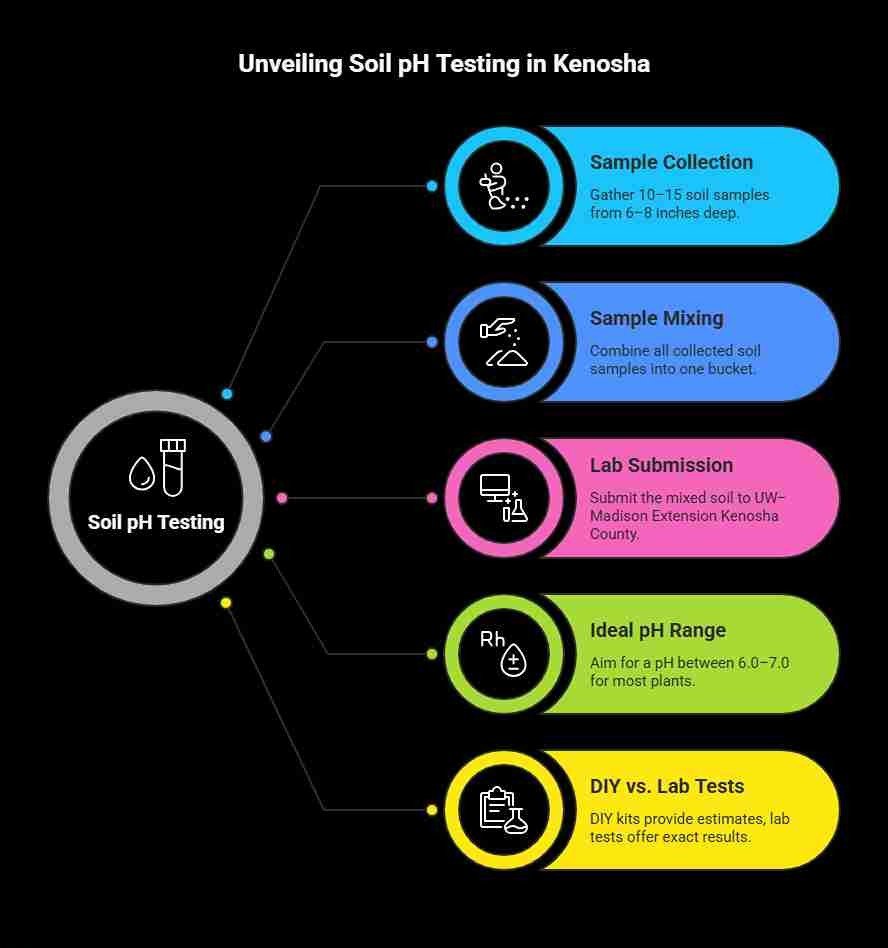
Collect soil samples, mix well, send to the UW–Madison Extension Kenosha County lab, and keep pH 6.0–7.0 for stronger lawns and gardens.
To test soil pH in Kenosha:
- Collect 10–15 soil samples from 6–8 inches deep
- Mix them into one bucket
- Send to the UW–Madison Extension Kenosha County soil lab
- Aim for a pH between 6.0–7.0 for most lawns and gardens
DIY kits give estimates. Lab tests give exact pH + fertilizer recommendations.
Why Soil pH Matters in Kenosha
Soil pH affects nutrient absorption. Kenosha’s mixed soils vary, so testing helps keep lawns and gardens healthy at 6.0–7.0.
If pH is wrong:
- Fertilizer stops working
- Grass turns yellow
- Vegetables grow slowly
- Plants become disease-prone
Most lawns and gardens around Kenosha grow best at slightly acidic to neutral soil (6.0–7.0).
Because Kenosha soils come from glacial clay + lake-effect conditions, they vary widely.
One yard may be acidic. The neighbors may be alkaline.
Testing removes guesswork.
When to Test Soil in Wisconsin
In Wisconsin climates like Kenosha, test soil in fall or early spring and retest every 3–5 years for healthy lawns and gardens.
- Late fall (after harvest)
- Early spring (before planting)
Test every:
- 3–5 years (maintenance)
- 1 year (if adjusting pH)
How to Collect Soil Samples (Step-by-Step)
Take 10–15 soil cores, remove debris, mix thoroughly, then send 1–2 cups to a lab for reliable results.
This part determines accuracy. Poor sampling = wrong results.
Tools
- Clean bucket
- Trowel or soil probe
- Sample bags
- Marker
Steps
1. Separate areas
Test lawn, garden beds, and shrubs separately.
2. Remove surface debris
Clear grass, mulch, leaves.
3. Take multiple cores
- Lawn → 3–4 inches deep
- Garden → 6–8 inches deep
- Collect 10–15 spots
4. Mix thoroughly
Combine in bucket → break clumps → mix well
5. Send a sample
Place 1–2 cups in the bag and label clearly
Done. You now have a representative sample.
Best Soil pH Testing Methods (Compared)
DIY kits are quick, meters help monitor, but professional lab testing gives the most accurate pH and fertilizer recommendations.
Option 1 – DIY Test Kits
Cheap and fast.
Pros (DIY PH Test Kits)
$10–30
Instant results
Cons (DIY PH Test Kits)
Low accuracy
Only shows pH
Hard to read colors
Best for quick checks only.
Option 2 – Digital pH Meters
Reusable probes.
Pros (Digital PH Meters)
Instant numbers
Reusable
Cons (Digital PH Meters)
Cheap ones inaccurate
Must calibrate
Needs moist soil
Good for monitoring, not diagnosis.
Option 3 – Professional Lab Testing (Recommended)
Most accurate method.
Send soil to:
UW–Madison Extension Kenosha County
You get:
- Exact pH
- Nutrients (NPK, micronutrients)
- Organic matter
- Lime/sulfur recommendations
- Cost: $15–25
- Best value by far.
Ideal Soil pH for Common Kenosha Plants
Most lawns and gardens grow best between pH 6.0 and 7.0, which allows nutrients to stay available to plants.
Plant Type | Ideal PH |
|---|---|
Lawn/Turfgrass | 6.0 to 7.0 |
Vegetables | 6.0 to 7.0 |
Tomatoes/Peppers | 6.2 to 6.8 |
Blueberries | 4.5 to 6.5 |
Evergreens | 5.5 to 6.5 |
Flowers | 6.0 to 7.0 |
How to Fix Soil pH
If Soil Is Too Acidic (Low pH)
Add agricultural or dolomitic lime to slowly raise soil pH and improve nutrient availability.
Use:
- Agricultural lime
- Dolomitic lime
Apply elemental sulfur or organic matter to gradually lower soil pH and help plants absorb nutrients.
- Spread evenly
- Water well
- Wait several months
If Soil Is Too Alkaline (High pH)
Apply elemental sulfur or organic matter to gradually lower soil pH and help plants absorb nutrients.
Use:
- Elemental sulfur
- Iron sulfate
- Compost/organic matter
Sulfur works slowly but effectively.
Typical Costs in Kenosha | How to Check Soil PH
DIY kits cost $10–30, meters $20–100, and lab tests about $15–25, offering the best value and accuracy.
Item | Price |
|---|---|
DIY kit | $ 10-20 |
Digital meter | $ 20-100 |
Lab test | $ 15-25 |
Lime (50 lb) | $ 5-10 |
Sulfur | $ 15-30 |
Professional testing usually saves money by avoiding wrong amendments.
Local Soil Testing Help
Send soil to the UW–Madison Extension Kenosha County lab for precise pH results, nutrient analysis, and amendment advice.
They provide:
- Testing forms
- Lab submission help
- Personalized advice
- Wisconsin-specific recommendations
If you want convenience, some local lawn care companies collect samples for you.
Pro Tips for Kenosha Gardeners
- Lake Michigan water can slowly raise pH
- Clay soils change slowly → apply amendments gradually
- Always retest after 12 months
- Compost improves pH stability naturally
- Don’t guess, test first
FAQs | How to Check Soil PH
Related Lawn Care Guides for Kenosha Homeowners
Keep your lawn looking its best year-round with these expert-written guides, each tailored to Wisconsin’s climate and Kenosha-area lawns.
Best Height to Mow Grass for a Healthy Lawn
Learn the recommended grass height for Kenosha lawns to encourage deep roots, reduce weeds, and maintain vibrant green color. Proper mowing height is key to a durable, stress-resistant lawn year-round.
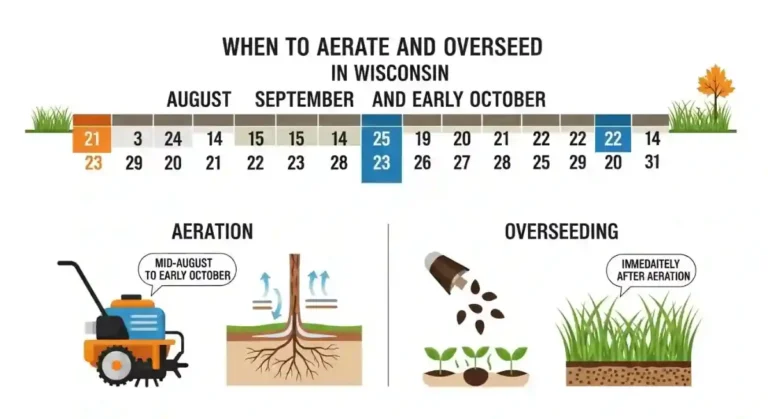
When to Aerate and Overseed in Wisconsin’s Growing Season
Discover the ideal timing to aerate and overseed your cool-season grass. Proper scheduling promotes strong roots, fills in bare spots, and keeps your lawn lush and healthy throughout summer.
Lawn Fertilization Schedule for Southeastern Wisconsin
Follow our Wisconsin-specific fertilization calendar to feed your grass at the right times. Learn what nutrients your lawn needs in spring, summer, and fall for vibrant, weed-resistant growth.
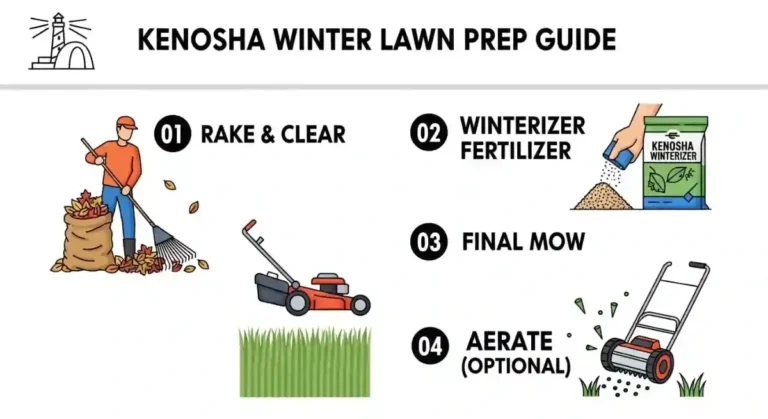
How to Prepare Your Lawn for Winter in Kenosha
Get step-by-step tips on winterizing your lawn before the cold hits. From the last mow of the season to protecting your turf from snow mold, we’ll help your grass bounce back strong in spring.